Is Fitzroy Island Safe To Swim?
A straight answer on swimming safety at Fitzroy Island: the safe zones Queensland Parks names, stinger season, currents, kids, and which tours include the gear.
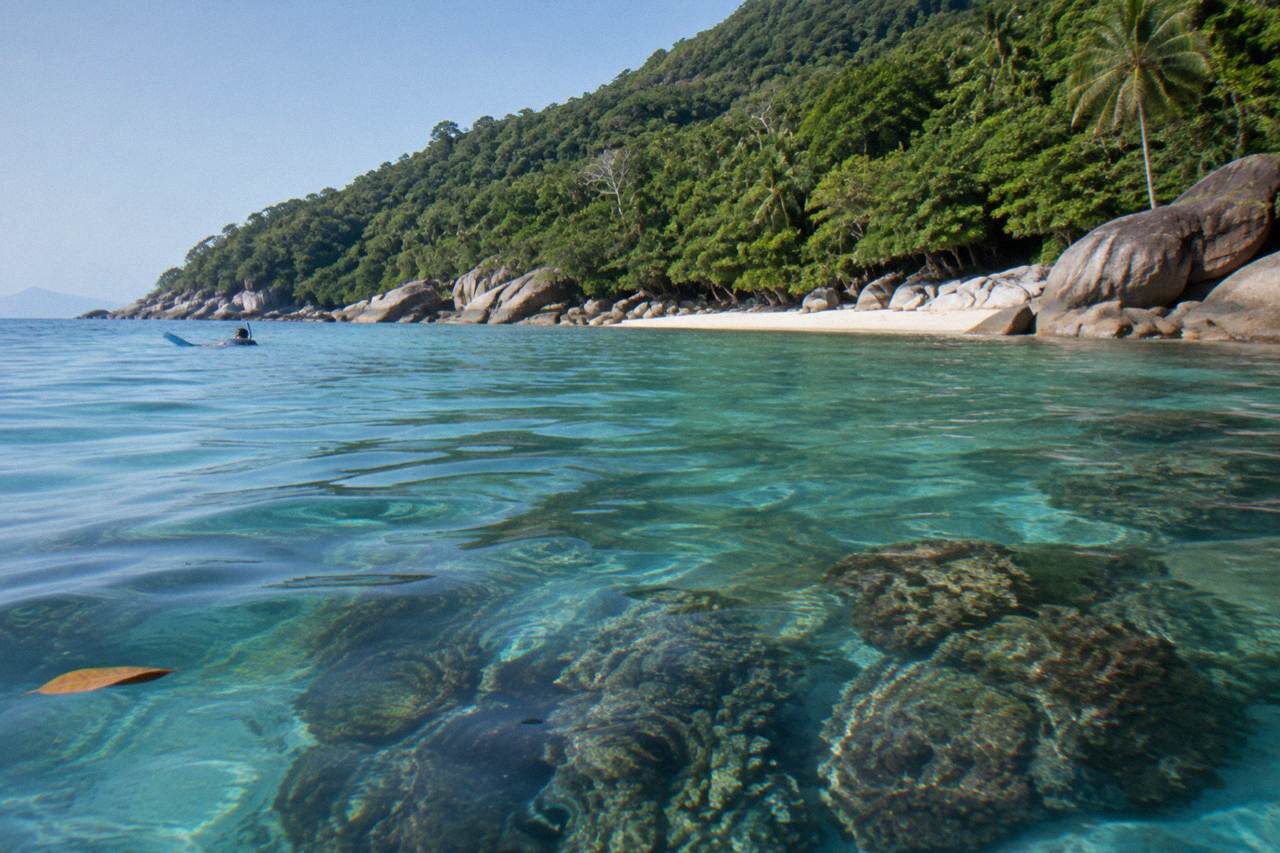
Fitzroy Island sits 25 km east of Cairns, a 45-minute catamaran crossing, and the swimming there is genuinely good: sheltered bays, fringing reef close to shore, and water warm enough year round that the question is never "is it cold", it is "where and when". The short answer is yes, Fitzroy Island is safe to swim for most people, with two conditions that matter more than anything else. Queensland Parks names Welcome Bay and the water off Nudey Beach as the snorkelling areas, and it warns that swimming elsewhere around the island may be dangerous because of strong currents. And from roughly November to May, with higher risk from October, a stinger suit is advised for anyone in the water. Everything else, coral cuts, supervision, boats, jellyfish vinegar stations, is detail, and this page goes through the detail. For the wider picture, our guide to swimming in the Great Barrier Reef today covers reef health, stinger season, and the tours that actually get you in the water.
Is Fitzroy Island Safe To Swim?
Yes, Fitzroy Island is safe to swim for most visitors who stick to the two designated zones, Welcome Bay and the water off Nudey Beach, and follow stinger season advice. Queensland Parks warns that other parts of the coastline may be dangerous due to strong currents, and with no lifeguards on the island, swimmers should stay in sheltered bays, wear stinger suits in season, and swim within their ability.
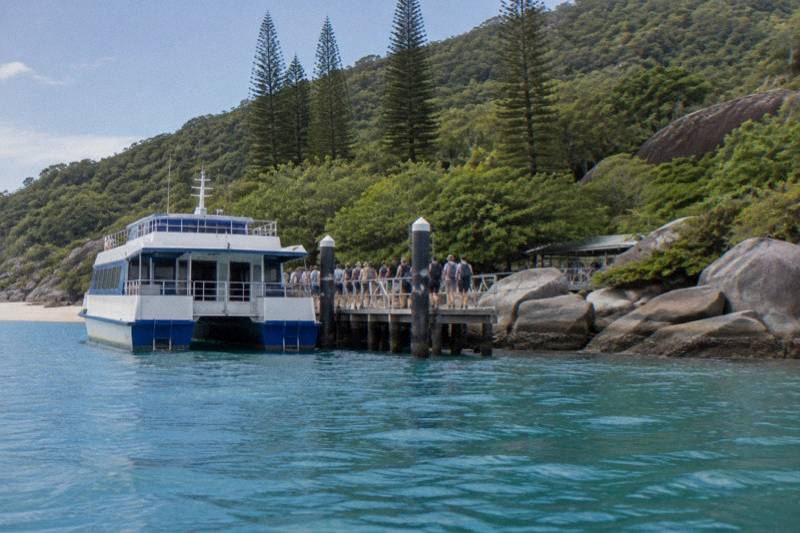
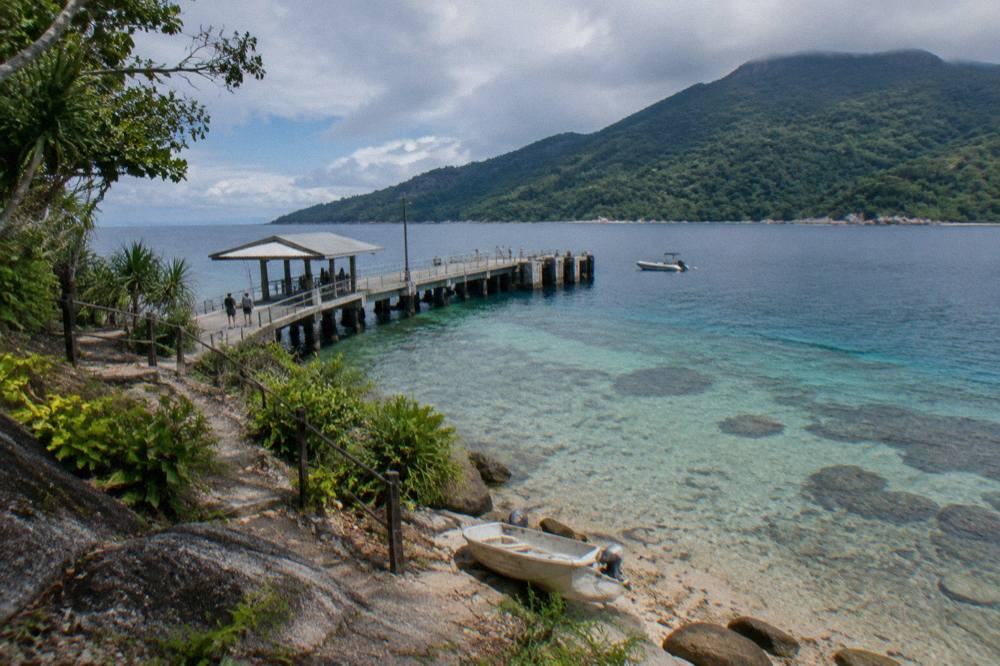
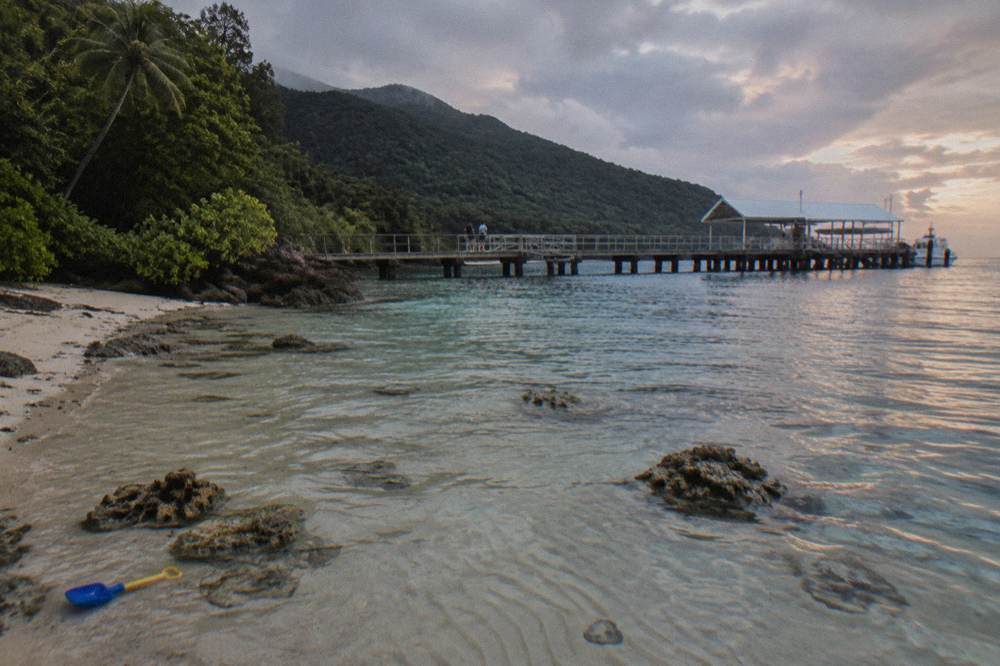
That structural point is worth spelling out. On a mainland beach, safety comes from flags and lifeguards. On Fitzroy Island, safety comes from geography. Welcome Bay is where the ferries arrive, a natural harbour bounded by the jetty on one side and granite headlands on the others, and it is the most protected water on the island. Nudey Beach, a 1.2 km return walk from the jetty over bitumen track and stone steps, sits in its own small cove with coral that starts close to shore. Queensland Parks describes both as offering "the chance to explore a fringing reef", which is the official way of saying the reef is right there, not a boat ride away.
What the official pages do not say is just as important. Whether the swimming area in Welcome Bay is netted is not stated in any official source we could find, so we will not claim it either way. If a netted enclosure is essential to your decision, ask the resort or your tour operator before you book, or plan around the stinger suit instead, which is what the reef operators themselves do. The resort's own FAQ says box jellyfish and Irukandji "might be present year-round, but there is a higher risk between October and May", and that stinger suits are available to hire, with vinegar stations placed around the resort. That is the honest picture: not a guarantee of protection, but a clear, manageable system.
The tours reflect the same logic. Every ferry product on this site, from the A$88 half days to the A$202 Best of Island package, puts you in Welcome Bay with free time to swim; the ones that add snorkel gear or a glass-bottom boat simply change how you see the water, not whether the water is safe. If you are weighing up which ticket matches your swimming confidence, the comparison below covers the three that suit most swimmers.
For a fuller picture of the water itself, the Fitzroy Island snorkelling guide covers the zones, gear and what lives on the fringing reef in detail.
Where Is It Safe To Swim On Fitzroy Island?
Two places carry the official tick: Welcome Bay, where the ferries dock, and the water off Nudey Beach, reached by a 45-minute moderate return walk. Queensland Parks names both as the island's snorkelling areas and states plainly that snorkelling in other locations around the island may be dangerous due to strong currents. Everything outside those bays is not recommended for swimming, and the warning is about currents, not just distance from help.
Welcome Bay is the practical choice for most visitors. You step off the ferry and you are already standing in the swimming area. The bay is small enough to cross comfortably, the jetty gives a clear reference point, and the fringing reef sits along the edges where boat traffic does not go. Loose coral underfoot is the main annoyance, so water shoes or reef shoes earn their price on the first ten steps. The coral is part of the draw: Queensland Parks lists snorkelling here as a thing to do, and the reef restoration nursery in the bay area has been growing and out-planting corals since late 2017, which is why the coral gardens near the headland are worth the short swim.
Nudey Beach is the better-looking swim. The walk is moderate, predominantly bitumen with steep stone steps and boulders near the end, and the beach itself is white coral sand with reef starting metres from shore. The Fitzroy Island Adventures page notes Nudey Beach was ranked #1 on Brad Farmer's 2018 list of Australia's 101 Best Beaches, and the ranking was for the beach, not the swim, but the swim holds up its end. Descriptions of the snorkelling note better coral coverage around the headland and rocky sections, with hard and soft corals, reef fish, and turtles reported by guests, though sightings are wild animals and never promised.
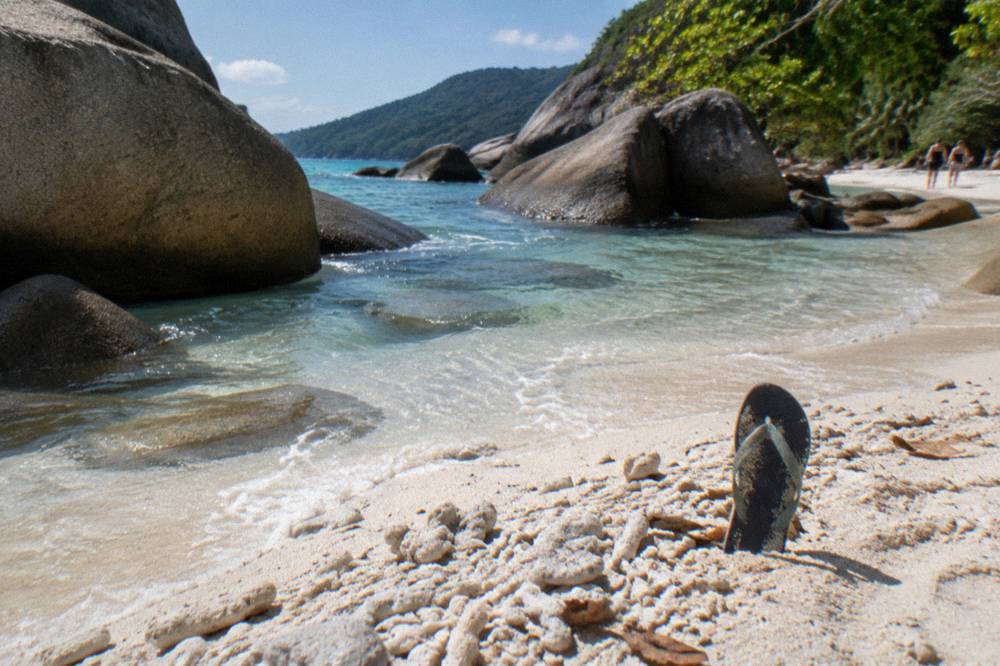
Here is the two bays side by side, using only what the official and operator pages state:
| Area | What Queensland Parks says | Access | Best for |
|---|---|---|---|
| Welcome Bay | Named snorkelling area, fringing reef | Steps from the ferry jetty | First swim, families, easy gear access |
| Nudey Beach | Named snorkelling area off the beach | 1.2 km return moderate track | Coral close to shore, scenery |
| Other coastline | May be dangerous due to strong currents | Various tracks and headlands | Not recommended for swimming |
Two rules from the park pages apply everywhere on the water. The island and its waters sit inside the Great Barrier Reef World Heritage Area and two marine parks, so Fisheries Queensland limits and marine park rules apply, and public moorings are there for boats, not swimmers. And the park asks visitors to check shoes, gear and bags for soil, seeds and insects before arriving, because these World Heritage islands are kept among the most pest-free in the world. Neither rule stops you swimming; both are part of why the swimming stays good.
If you would rather see the reef with a guide in the water, the guided snorkel safari pairs the full-day ferry with a guided snorkel tour and gear hire for the whole day.
The safari is the 10-hour Fitzroy Flyer product with a guided session and snorkel hire until 4:00pm, rated 4.2 from 43 reviews, a small pool we report as such. For swimmers who want eyes on the water and a briefing on the reef before getting in, it answers the safety question with company rather than equipment.
What About Stingers, Currents And Other Hazards?
The hazards that actually matter at Fitzroy Island are, in order: marine stingers from October to May, currents outside the two named bays, and coral cuts underfoot. Box jellyfish and Irukandji may be present year-round with higher risk between October and May, so a stinger suit is advised November to May and sensible either side of that. Currents are managed by swimming only in Welcome Bay or off Nudey Beach, and coral by wearing reef shoes.
Start with the stingers, because they are the hazard people ask about. The resort's FAQ is the clearest official statement: box jellyfish and Irukandji "might be present year-round, but there is a higher risk between October and May", and it advises stinger suits for snorkelling and swimming, available to hire, with vinegar stations around the resort as first aid. Queensland-wide guidance runs the season roughly November to May, with swimming enclosures going in at patrolled mainland beaches when the season starts. Note the mainland caveat: those nets are at patrolled beaches like the Cairns Esplanade lagoon area, not on the island, and no official source states that Welcome Bay's swimming area is netted. On Fitzroy Island the suit is the system.
| Period | Stinger risk | What to do |
|---|---|---|
| November to May | Season proper, suits advised | Full-body stinger suit for any swim or snorkel; hire available via the resort |
| October | Higher risk begins | Suit strongly advised; check with your operator on the day |
| June to September | Lower risk, not zero | Suit optional for most; still sensible for long snorkels |
Currents are the quiet one. Queensland Parks does not put a sign on every headland; it puts one sentence in the park notes: snorkelling in other locations around the island may be dangerous due to strong currents. That sentence covers the whole island outside the two bays, including water that looks calm from the track. The reason is the island's shape: Fitzroy is a granite massif with exposed coastline on three sides, and ocean current wraps around it. The bays face the sheltered side. Swim where the ferries can safely dock and where the park says to swim, and the current question answers itself. Currents are only one part of the safety picture, so if wildlife is on your mind too, the guide to crocodile warnings around Fitzroy Island covers what Queensland Parks and the ferry operators actually say.
The remaining hazards are ordinary tropical ones. Coral cuts: wear reef shoes, and rinse any cut thoroughly, coral scrapes infect easily in the tropics. Sun: the Bureau of Meteorology lists Cairns UV as extreme for most of the year, and a stinger suit doubles as sun protection, which is why reef operators like them even in the low season. Marine life: GBRMPA's responsible reef practices ask swimmers never to touch, chase or feed turtles and other wildlife, and to keep distance from any animal you encounter. And crocodiles, the question that follows every North Queensland swimming page: no official source lists a crocodile warning specific to Fitzroy Island, no sightings reported, no alerts. That is an absence of evidence, not a promise, and Queensland Parks alerts should always be the last check before any tropical water, but nothing in the official record marks Fitzroy Island as croc habitat the way it does some mainland estuaries.
For the seasonal side of this, the stinger season and swimming guide goes deeper on suits, vinegar stations and the season calendar, and the short answer to do you need a stinger suit on Fitzroy Island is essentially yes from late October through May.
Is Fitzroy Island Safe For Kids And Weak Swimmers?
Mostly yes, in Welcome Bay, with the usual caveats: no lifeguards, direct adult supervision required, and flotation for weak swimmers. Welcome Bay is shallow close to shore and the ferry jetty gives a fixed landmark, which makes it one of the easiest swims on the reef. Weak swimmers should treat Nudey Beach as a beach visit rather than a snorkel, since the walk and the water together are a lot for one day.
The honest framing for families is that Fitzroy is easier water than almost anywhere else on the reef. There is no boat transfer from a pontoon into deep open water; you swim from a beach in a bay. The Fitzroy Flyer timetable notes under-18s must travel with an adult, which sets the tone for the day. On the island, the resort pool (7am to 9pm, for room guests rather than day visitors) is the zero-current option, and Foxy's Bar near the beach covers the food and drink side. The Fitzroy Island with kids and accessibility guide covers prams, tracks and facilities in full.
Weak and non-swimmers still have two good ways to see the reef without swimming it. The glass-bottom boat runs 45 minutes at 9:30am and 3:00pm from the resort, at A$29 adult and A$19 child as the operator's own published fare, and it is selectable as an option on several ferry listings, including the Fitzroy Island Adventures day tour at from A$108 per person. And the Turtle Rehabilitation Centre, on the island and open, runs 30-minute visits Wednesday to Sunday at 2:15pm and 2:45pm, A$20 adult and A$12 child, exclusive to resort guests and Fitzroy Flyer travellers. A flatback turtle rehabilitated by the centre's volunteers was released from the island in August 2026, which tells you the centre is active, though no sighting of a turtle in the water is ever promised.
For the family ticket comparison, here are the three most family-relevant listings with their safety-relevant inclusions, exactly as the roster states them:
| Listing | Price | Rating | Duration | Swimming-relevant inclusions |
|---|---|---|---|---|
| Fitzroy Island Adventures full day | from A$108 pp | 4.5 from 1,990 reviews | 8 hours | Up to 7 hours on island, optional snorkel gear or glass-bottom boat |
| Sunlover ferry with options | from A$105 pp | 4.4 from 888 reviews | 6.5 to 7.5 hours | Free time on island, picnic lunch box selectable |
| Two islands in one day | from A$196 pp | 4.1 from 187 reviews | 8 hours | Snorkel equipment usable at both islands if selected |
One cost note that applies to every ticket: the Great Barrier Reef Marine Park Authority charges an Environmental Management Charge of A$8.50 per person for a full day (A$4.25 part day), rising to A$9.00 and A$4.50 from 1 April 2027. No listing on this site states whether it is included in the fare, so check the booking page; Fitzroy Island Adventures separately states a A$5 per person facilities levy inside its own fare.
When Is Swimming Risk Highest At Fitzroy Island?
Risk peaks in the wet season months, January to March, when stinger season overlaps the cyclone season and the heaviest rain, and it drops to its floor from June to September, the dry season. None of those months is dangerous by default; the difference is how much the conditions demand of you. Summer swimming needs a suit and a weather check, winter swimming needs neither, and the bays stay the same bays.
The Bureau of Meteorology's Cairns averages make the pattern plain: January averages 404.8 mm of rain, February 437.5 mm and March 422.1 mm, each with around 16 rain days at or above 1 mm, while July and August average 33 mm and 27 mm on about five rain days. The Australian cyclone season runs 1 November to 30 April, and the current long-range outlook points to a hotter-than-usual spring and summer with the potential for stronger systems in the Coral Sea. None of this closes the island: ferries run daily year round, and the operators' departures continue in all but genuinely unsafe weather, when trips are cancelled or rescheduled rather than run badly. The practical summer routine is a morning swim before the typical afternoon build-up, a suit regardless, and a check of the forecast and any park alerts before you walk a track.
Reef condition is worth a word here, because "is the water safe" sometimes means "is the reef dying". The official answer for the region is cautiously positive: the AIMS Long-Term Monitoring Program's 2025-26 survey of 121 reefs recorded Northern Great Barrier Reef hard coral cover rising to 35.1%, above the long-term average of 27.0%, which AIMS describes as signalling the start of recovery from the 2024 mass bleaching event. GBRMPA's September 2026 update recorded August sea surface temperatures close to long-term averages across the Northern region, with only low levels of bleaching observed in surveys. These are region-wide figures, not a Fitzroy-specific measurement, and we present them as exactly that, but the direction of travel is good, and the fringing reef in the named bays is the accessible edge of it.
Whatever the season, the ticket that most directly answers "safe to swim" is the one that puts gear in your hands: the 11am Fitzroy Flyer day trip includes snorkelling equipment with the 11am to 5pm return ferry, from A$129 per person, rated 4.0 from 8 reviews, a small pool we report honestly. You can also Check availability on the live listing.
If a longer day suits, the Fitzroy Island Adventures day tour is the most reviewed option on this site, and its optional snorkel gear and stinger suit selections are made at booking.
That listing runs 7 hours 30 minutes from Marlin Marina, from A$108 per person, 4.2 from 711 reviews, with snorkel gear, stinger suit and glass-bottom boat all selectable at booking, which is exactly the checklist a warm-season swimmer wants sorted before the boat leaves.
For planning the rest of the day around the water, the what to bring guide covers suits, shoes and sun protection, and Fitzroy Island Tours keeps the full ticket comparison current across every operator and departure.
The Bottom Line On Swimming At Fitzroy Island
Fitzroy Island is safe to swim for anyone who follows two rules: swim in Welcome Bay or off Nudey Beach, the areas Queensland Parks names, and wear a stinger suit from October through May. Within those rules the water is sheltered, the reef is close, and the hazards that remain, coral underfoot, sun, no lifeguards, are ordinary tropical beach management. That is an easier safety brief than almost any other reef site.
Book the ticket that matches your confidence. A confident swimmer takes the ferry plus gear and spends the day in the water; a nervous one takes the ferry plus glass-bottom boat and gets the same reef through a window; a family splits the difference with a morning in the bay and an afternoon at the Turtle Rehabilitation Centre. The three below cover all of those cases.
All three depart from Cairns marina berths, cross in about 45 minutes, and leave you in the same sheltered bay. The safety, in the end, is mostly in the geography, and the geography does not change with the ticket.
Common Questions About Swimming Safety At Fitzroy Island
Is Fitzroy Island safe to swim?
Yes, in the two areas Queensland Parks names, Welcome Bay and the water off Nudey Beach. The park service warns that swimming in other locations around the island may be dangerous due to strong currents. From October to May, wear a stinger suit; the resort states box jellyfish and Irukandji may be present year-round with higher risk in that period, and suits are available to hire.
Is it safe to swim on Fitzroy Island?
Yes, with the same two conditions: swim only in Welcome Bay or off Nudey Beach, and wear a stinger suit through the warmer months. There are no lifeguards, so supervise children directly and stay within your ability. The bays are sheltered and the fringing reef sits close to shore, which is why the island suits families and casual swimmers better than open-water reef sites.
Are there crocodiles at Fitzroy Island?
No Fitzroy-specific crocodile warnings, sightings or alerts appear in any official source we searched, and Queensland Parks' Fitzroy Island pages carry no such warning. That is an absence of evidence rather than a guarantee, and general tropical North Queensland caution always applies, with Queensland Parks alerts the place to check before any trip.
Is the swimming area at Fitzroy Island netted?
No official source states whether the Welcome Bay swimming area is netted or enclosed, so we do not claim it either way. The protection the resort and operators actually describe is the stinger suit, advised November to May with higher risk from October, available to hire, plus vinegar stations around the resort. If an enclosure is essential to your plans, ask the resort or your operator before booking.
When should you not swim at Fitzroy Island?
Avoid the water outside the two named bays at any time of year, because Queensland Parks warns of strong currents around the rest of the island. In the wet season, January to March, expect stinger season at its peak alongside the cyclone season, so swim with a suit, prefer mornings, and check the forecast and any park alerts on the day. Trips are cancelled rather than run in genuinely unsafe weather.
Do I need a stinger suit to snorkel at Fitzroy Island?
From November to May, yes, it is advised, and October is treated as the start of the higher-risk period. The resort's FAQ says box jellyfish and Irukandji might be present year-round, so a suit is sensible even in the cooler months, and it doubles as sun protection in extreme tropical UV. Several ferry listings let you select a stinger suit at booking.