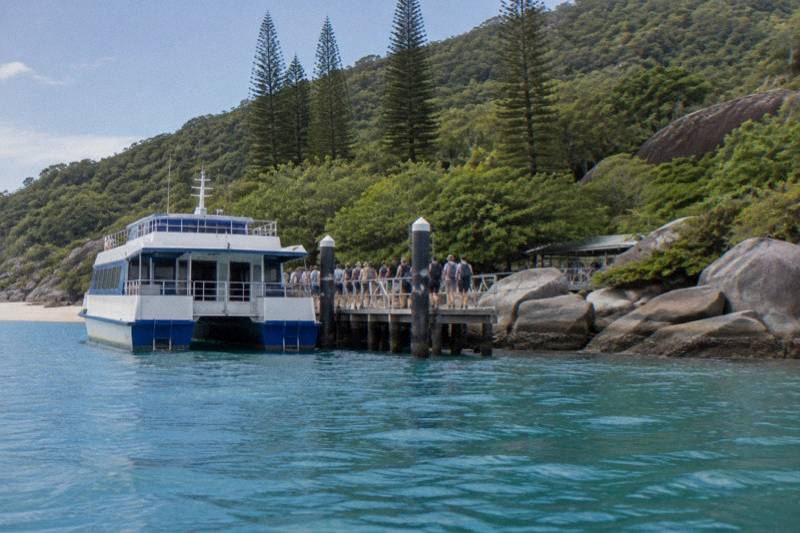
Do I Need A Stinger Suit On Fitzroy Island?
Stinger suit advice for Fitzroy Island: season dates, what the suits protect against, hire options, and which ferry and snorkel tours include one.
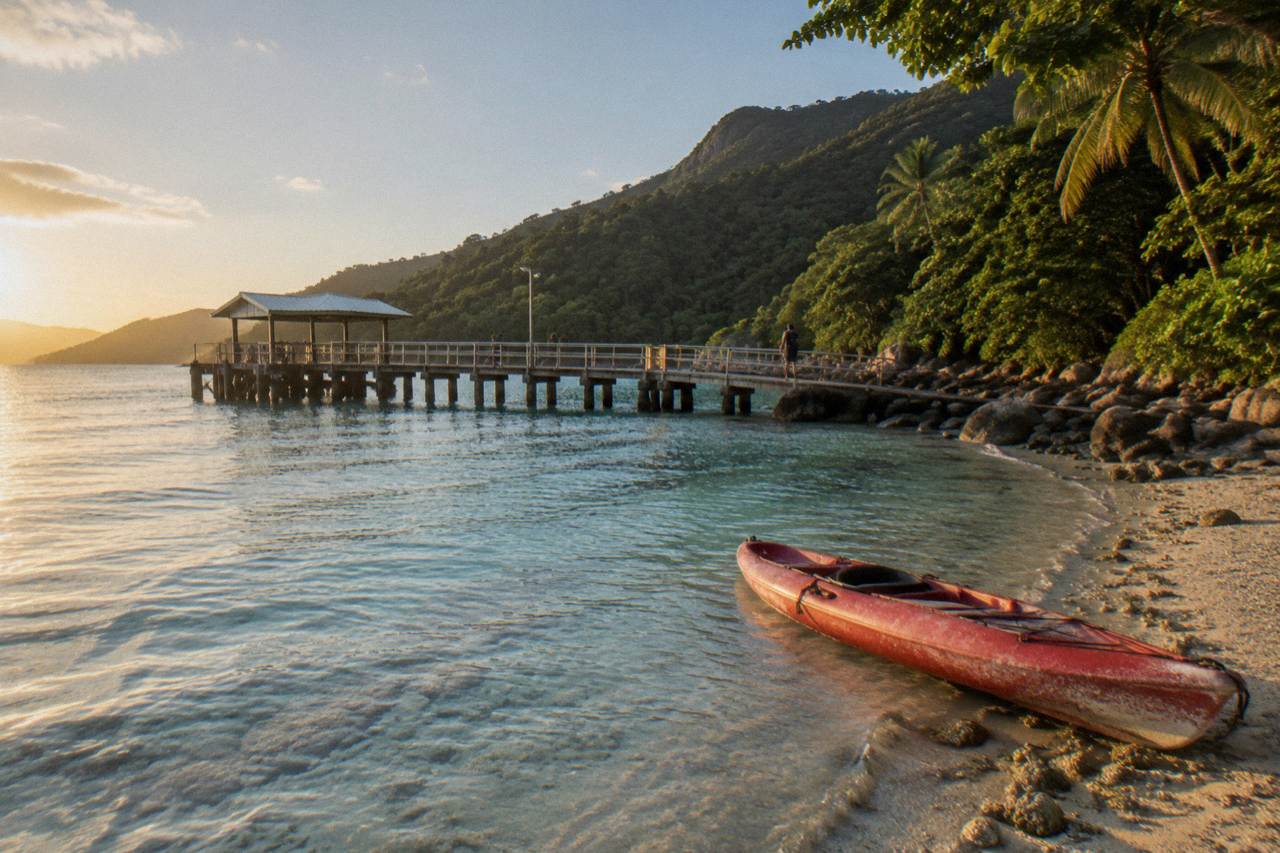
Fitzroy Island sits 25 km east of Cairns inside the Great Barrier Reef World Heritage Area, and the water that makes it worth visiting is tropical water year-round. Tropical water in North Queensland carries marine stingers, including box jellyfish and Irukandji, and that single fact shapes how locals swim, how operators kit out their guests, and how you should plan any swim off Welcome Bay or Nudey Beach. The resort's own guidance is blunt: these animals might be present year-round, but there is a higher risk between October and May, and stinger suits are recommended whenever you are in the water.
That is the honest headline, and everything else in this article is detail: what the suit actually does, when the risk peaks, where to hire one on the island, which of the bookable day trips hand you gear as part of the fare, and what to make of the advice about swimming areas. We compared the listings on this site's roster against the resort's published FAQ and Queensland Parks guidance, and the picture is consistent across all of them.
Do I Need A Stinger Suit On Fitzroy Island?
For most of the year, yes: the standard advice is to wear a full-body stinger suit whenever you swim or snorkel off the island, and from November to May, with higher risk from October, it is close to non-negotiable. Suits are available to hire on the island, and several tours include snorkel equipment as a selectable option. A sting-free day is always possible, and an unlucky one is rare, but the suit removes the gamble.
The question sounds like gear-nerd territory, but it is really a risk-management question, and the answer comes in layers. The first layer is season: the resort's FAQ states box jellyfish and Irukandji might be present year-round in these waters, with higher risk between October and May. Cairns tourism guidance describes the season as roughly November to May, when stinger nets go in at patrolled mainland beaches. Neither source promises danger on any given day, and neither promises safety either.
The second layer is what a suit is. A stinger suit is a full-body lycra garment, like a thin wetsuit, that keeps tentacle contact off your skin. It is not armour against a large box jellyfish envenomation in the way a shark cage is armour, but the vast majority of stings happen on exposed skin, and a suit removes nearly all of that exposure. It also doubles as sun protection, which in North Queensland UV terms is not a small bonus.
The third layer is practical: nearly every structured way of getting in the water around Fitzroy Island already accounts for stingers. Reef operators in the Cairns region supply suits on their trips, per the regional guidance, and on the island itself hire is available from the resort. The people who genuinely need to think hard about suits are independent swimmers and snorkellers who arrive on a ferry-only ticket with their own gear. Independent travellers planning their own time on the water can start with our guide to kayak and paddle hire on Fitzroy Island, which covers what to pack alongside a stinger suit.
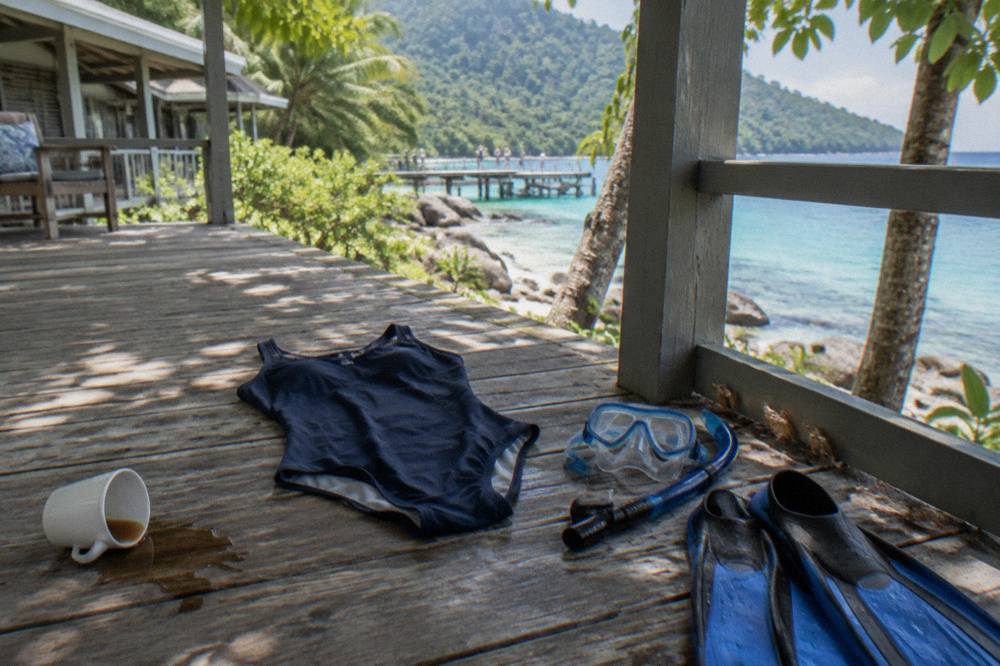
If you are booking a swim day rather than a beach day, the decision is mostly about which tour bundles the gear. The guided snorkel safari from Fitzroy Island Resort includes snorkel hire for the whole day until 4:00pm, and the Sunlover Best of Island package includes snorkelling equipment hire alongside a picnic lunch and a glass-bottom boat tour. If your question about stinger suits is really a question about booking a day in the water, these are the three listings that answer it directly:
The suit question and the booking question collapse into each other quickly. Pick a package that includes or offers gear, and the suit conversation happens at the counter rather than in your head at the beach.
When Is Stinger Season Around Cairns?
Stinger season in tropical North Queensland runs roughly November to May, with the resort's own FAQ flagging higher risk from October through May, and the tropical cyclone season overlaps it from 1 November to 30 April. Outside those months the risk drops but never reaches zero, because the resort states stingers might be present year-round. There is no month anyone official calls sting-free.
The Bureau of Meteorology's cyclone season for Australia runs 1 November to 30 April, and the stinger guidance tracks almost the same window. The resort, the closest source to the water in question, uses the widest framing: possible year-round, higher risk October to May, suits recommended when swimming or snorkelling. For practical planning, treat October to May as suit weather and June to September as strongly-advised weather.
That aligns with the rainfall pattern. Cairns averages heavy monsoonal rain in each of January, February and March, against only a handful of rain days across June to September, and calm dry-season water is when the region's swim days feel most carefree. But rainfall is a comfort variable, not a safety guarantee, and the honest framing is the one the resort uses: the suit is cheap insurance in every month.
| Period | Stinger risk framing | What officials advise |
|---|---|---|
| October | Risk rising, season effectively starting | Suit advised for any swim or snorkel |
| November to May | Stinger season, roughly | Full-body stinger suit whenever in the water |
| June to September | Risk lower, stingers still possibly present | Suit recommended, especially for long snorkels |
| Any month | Possible year-round per the resort FAQ | Vinegar stations around the resort; suits for hire |
There is a useful habit buried in that table: the decision to wear a suit should not be a monthly decision but an every-swim decision. Regulars in Cairns treat it like a seatbelt. For more on how the calendar shapes the whole trip, the weather and best time guide breaks down month by month, and the deeper swim-safety detail sits in stinger season and swimming.
What A Stinger Suit Actually Protects You From
A stinger suit protects against skin contact with the tentacles of box jellyfish and Irukandji, the two jellyfish classes that make North Queensland swimming risky, by covering the body in lycra that tentacles cannot reach through. It does not make the water safe in any absolute sense, and it does nothing about sunburn, currents, or coral scrapes on its own, though it reduces the first of those as a side effect.
The box jellyfish is the animal behind the dramatic warnings: a large one can deliver a medically serious envenomation, and the Irukandji is small, mostly transparent, and responsible for a delayed and distinctly unpleasant syndrome. Both drift with conditions rather than patrolling particular beaches, which is why no source will tell you Welcome Bay or Nudey Beach is reliably clear on a given Tuesday. The regional guidance for reef and island trips is consistent: wear full-body stinger suits, and operators provide them.
What the suit does mechanically is simple. Tentacles fire nematocysts on contact with skin; lycra is not skin, and a full-body suit with hands and feet covered, worn with a mask or a hood where supplied, leaves almost nothing to contact. First-aid guidance across the region pairs the suit habit with vinegar, which is why the resort states there are stinger and vinegar stations around its facilities. None of this is a reason for anxiety, it is the normal operating procedure of tropical swimming, the way rips are normal at surf beaches.
One point worth separating: suits are about stingers, not about crocodiles, which are a different question people often bundle in. No official source lists a Fitzroy-specific crocodile warning; the sensible habit is general tropical caution plus checking Queensland Parks alerts before you go. The are there crocs article covers that separately, and the resort's own FAQ, at fitzroyisland.com/faqs, is the closest thing to an on-island source for stinger guidance.
Where To Get A Stinger Suit On Fitzroy Island
Stinger suits are available to hire from the resort on Fitzroy Island, per its published FAQ, and snorkel gear hire comes bundled or selectable on most of the bookable day trips from Cairns. Independent travellers on a ferry-only ticket should plan to hire on the island or bring their own; the full-day ferry listings start from A$105 per person and treat gear as an option, not an inclusion. Once your snorkel gear is sorted, the next question is lunch, and our guide to eating on Fitzroy Island covers Foxy's Bar, the resort options, and whether to pack your own picnic.
The resort is the on-island source: its FAQ states suits are available to hire, with stinger and vinegar stations positioned around the facilities. If you arrive on a bare ferry ticket, that hire counter is your answer, and the cheapest listed way to be on the island at all is one of the half-day Flyer trips at from A$88 per person, which include the return ferry but not lunch, gear or a guide.
Booking a package shifts the job to the operator. The Fitzroy Island Adventures full-day trip, from A$108 per person and the most reviewed listing on this site at 4.5 from 1,990 reviews, lists snorkel gear and stinger suit use as selectable options at booking, as does its sister day tour listing. The guided snorkel safari includes snorkel hire for the full day. The point of difference between listings is exactly here, in what is bundled versus selectable, so the booking page deserves a careful read.
| Listing | From price | Gear as stated on the listing |
|---|---|---|
| Fitzroy Flyer morning half day | A$88 pp | Snorkel activity listed, equipment not included |
| Sunlover ferry, transfer only | A$105 pp | Gear an optional add-on to the transfer |
| Fitzroy Island Adventures full day | A$108 pp | Snorkel gear or glass-bottom boat selectable at booking |
| 11am Flyer day with snorkel | A$129 pp | Use of snorkelling equipment included, 4.0 from 8 reviews |
| Guided snorkel safari | A$168 pp | Snorkel hire all day until 4:00pm, 4.2 from 43 reviews |
| Best of Fitzroy Island day | A$202 pp | Snorkel hire, lunch and glass-bottom boat included, 3.9 from 17 reviews |
Two of those need honesty about review pools: the 11am Flyer day has 8 reviews and the Best of Fitzroy day has 17, both small samples, so treat the inclusion lists as the reliable part and the ratings as provisional. Whether a supplied suit specifically, versus generic snorkel gear, is included is the kind of detail that varies by option, and each listing should be checked for the stinger suit line before you assume it.
Swimming Safely At Welcome Bay And Nudey Beach
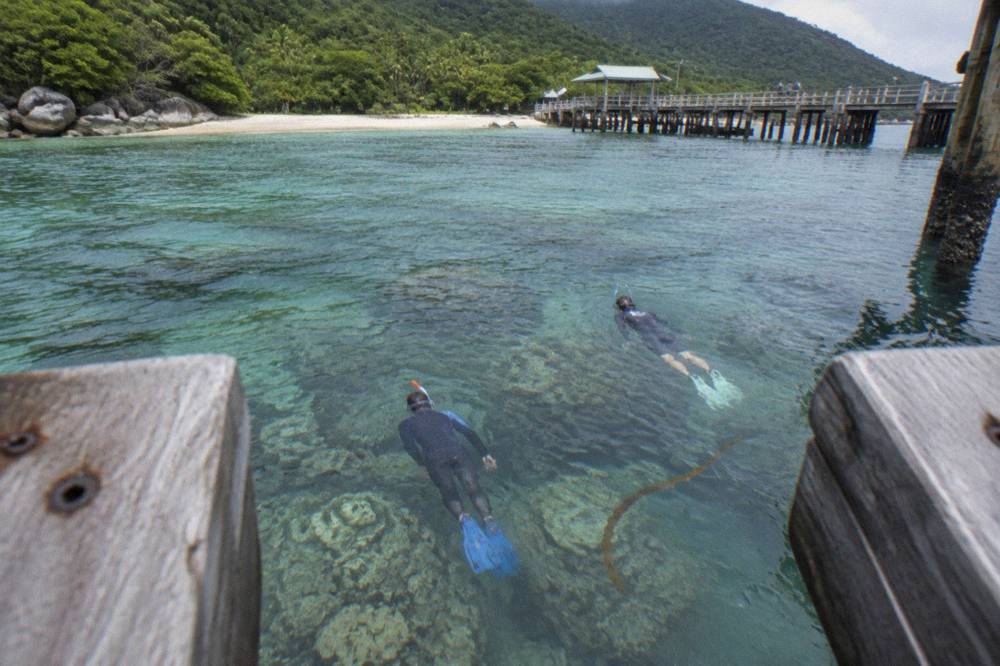
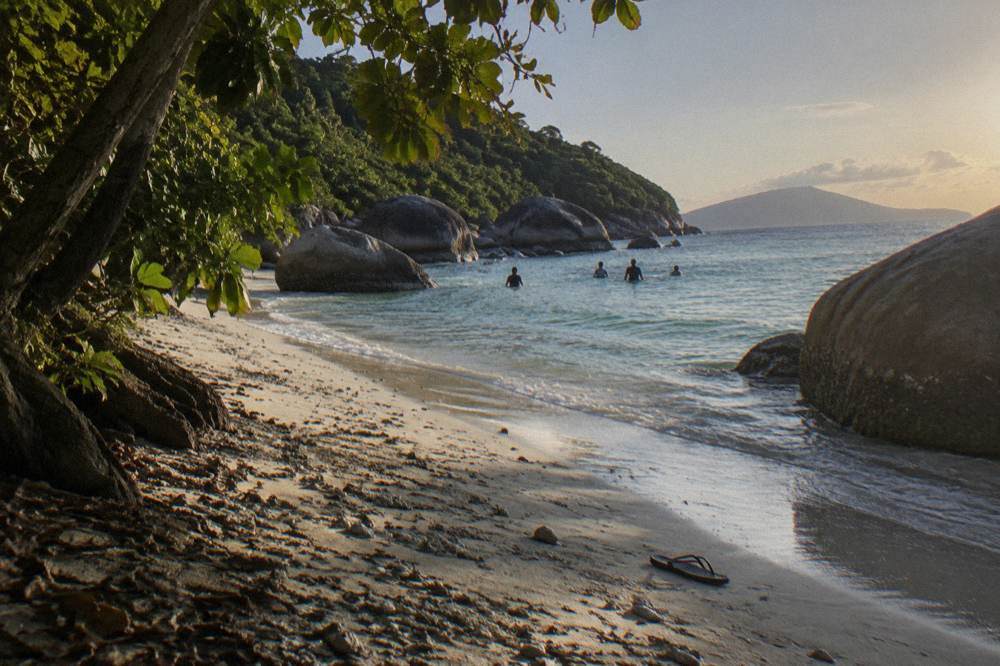
Queensland Parks names Welcome Bay and Nudey Beach as the places to snorkel the island's fringing reef, and warns that snorkelling elsewhere around the island may be dangerous due to strong currents. Whether the Welcome Bay swimming area is netted is not verified in any official source we could find, so the safe assumption is a suit, not a net.
That framing matters because a lot of mainland advice says "swim in the nets", and readers reasonably ask where Fitzroy Island's net is. The honest answer is that no official page we can cite confirms one at Welcome Bay. The resort's stinger guidance does not lean on a net; it leans on suits, stations and season awareness. That is the guidance to follow. For the fuller picture of where to get in the water and what lives there, the snorkelling guide covers the zones Queensland Parks names, and the Queensland Parks things-to-do page is the primary source for the snorkelling warning above.
Nudey Beach, reached by a 1.2 km return walking track, is the island's famous beach, ranked #1 on Brad Farmer's 2018 list of Australia's 101 Best Beaches according to the Fitzroy Island Adventures page. Its coral is often described as better around the rocky headland ends. None of that changes the suit question: the same water, the same animals, the same advice.
Currents, not just stingers, are why the Parks warning exists. The sheltered bay is one thing; the open sides of the island are another. Stay in the named zones, wear the suit, and keep an eye on conditions on the day, which shift with wind and tide like anywhere on the reef.
Do You Need A Suit For The Boat Trips Too?
For a glass-bottom boat tour, no: you stay dry, so stinger protection is irrelevant. For any reef pontoon day or guided snorkel tour, yes in season, and those operators work on the assumption you will wear one, with suits supplied or available as reef-industry standard practice. The distinction is simply whether your body enters the water.
The glass-bottom boat on Fitzroy Island runs 45 minutes at 9:30am and 3:00pm at A$29 adult as the resort's own published fare, and it is a genuinely good option for people who want the reef without the stinger question at all. Several ferry packages bundle it as the selectable extra instead of snorkel gear, which is a legitimate way to answer this article's question: don't get in.
For the bigger water days the suit assumption holds. The Moore Reef pontoon combo with Fitzroy free time, from A$337 per person, lists snorkel gear at the reef including a lycra suit and life jacket if required, which is the pontoon industry's standard kit. The two-day reef and island packages from A$375 include snorkelling equipment across both days. If your trip is reef-first, the suit is generally handled for you.
The broader reef context is worth a sentence because it answers a question people rarely ask out loud: is the water getting more dangerous? The monitoring bodies say the story of the moment is coral recovery and near-average temperatures, not a stinger surge, and stinger season has run on the same calendar for as long as the guidance has existed. For whether a swim is on at all, GBRMPA's reef health updates track conditions region by region.
The 11am Flyer day is the lightest way to bundle gear: from A$129 per person with snorkel equipment included and a 5:00pm return ferry, though its 8-review pool means the inclusions, not the rating, are the selling point. It suits travellers who want to arrive late morning, swim through the middle of the day, and let someone else supply the mask.
Planning Your Trip Around The Suit Question
Plan on wearing a stinger suit any month you visit, book a package that includes or offers gear if a swim is the point of the trip, and carry cash or card for on-island hire as the fallback. Check the listing for whether a suit specifically is included, since listings state snorkel equipment more often than they name stinger suits.
A reader asking about stinger suits is usually booking a swim day, so the last practical pass is the booking one. The guided snorkel safari at from A$168 per person is the strongest answer for a suit-and-guide day: full-day hire, a guided snorkel tour at 10:00am, and free cancellation up to 24 hours before start. The Best of Island day at from A$202 per person bundles lunch, snorkel hire and the glass-bottom boat for swimmers who also want a dry hour. And the two half-day Flyer trips at from A$88 per person are the budget route, with hire sorted on the island.
Beyond the booking, three habits carry the day: recheck Queensland Parks alerts before you travel, since track and marine conditions are posted there; treat October to May as firm suit season and the rest of the year as suit-advised; and remember the suit question on Fitzroy Island Tours is really a comfort question, because the answer is always available at the counter. For what else goes in the bag, the what to bring guide completes the packing list, and the day trip options compared page lines up every listing side by side.
The Best of Fitzroy listing, 3.9 from 17 reviews so far, is the one to pick when you want the water, the lunch and the boat in a single fare, and the suit conversation folded into the hire. Small review pool, honest caveat, real inclusions.
Whichever way you book, the water at Fitzroy Island is the reason you are going. The suit is the two-minute habit that lets you stay in it.
Common Questions About Stinger Suits
Do I need a stinger suit on Fitzroy Island?
Yes for most of the year. The resort's advice is that stingers might be present year-round with higher risk from October to May, and suits are recommended whenever you swim or snorkel off the island. Hire is available from the resort, and most tour packages include or offer snorkel gear with suit options.
Do I need a stinger suit on Fitzroy Island in winter?
The risk is lower from June to September but not zero, because the resort states stingers might be present year-round. A suit is recommended for long snorkels in any month, and it doubles as sun protection.
Can I hire a stinger suit on the island?
Yes. The resort's FAQ lists stinger suit hire, and stinger and vinegar stations are positioned around its facilities. If you arrive on a ferry-only ticket, the resort is the on-island source.
Do the tours include stinger suits?
Listings state snorkel equipment more often than they name stinger suits specifically. Some, like the Moore Reef combo, list a lycra suit with the snorkel gear; ferry-based day trips usually list snorkel gear as a selectable option. Check the operator's live listing for the suit line before booking.
Is the swimming area at Fitzroy Island netted?
No official source we could find verifies a netted swimming enclosure at Welcome Bay, so plan around a suit rather than a net. Queensland Parks names Welcome Bay and Nudey Beach as the snorkelling locations and warns that other spots around the island may be dangerous due to strong currents.