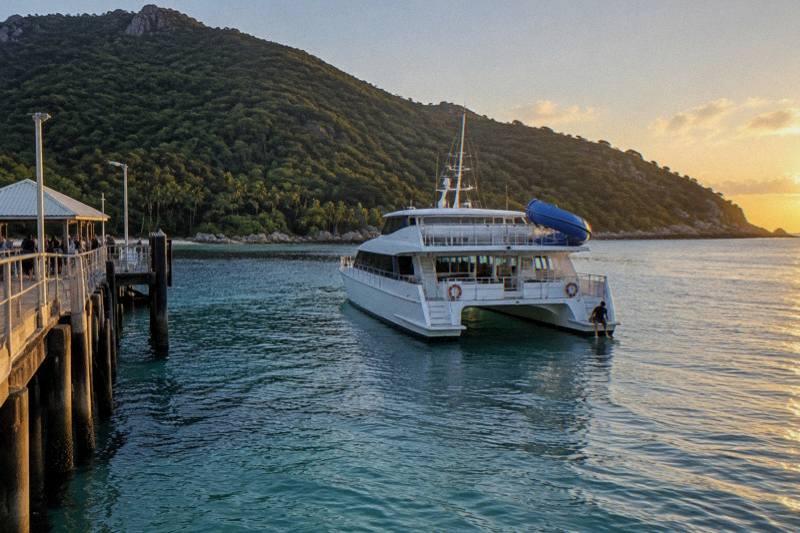
Can You Still Swim In The Great Barrier Reef?
Yes, you can still swim in the Great Barrier Reef. Here is what the official reef health data says, how stinger season shapes swimming near Cairns and Fitzroy Island, and which tours put you in the water.
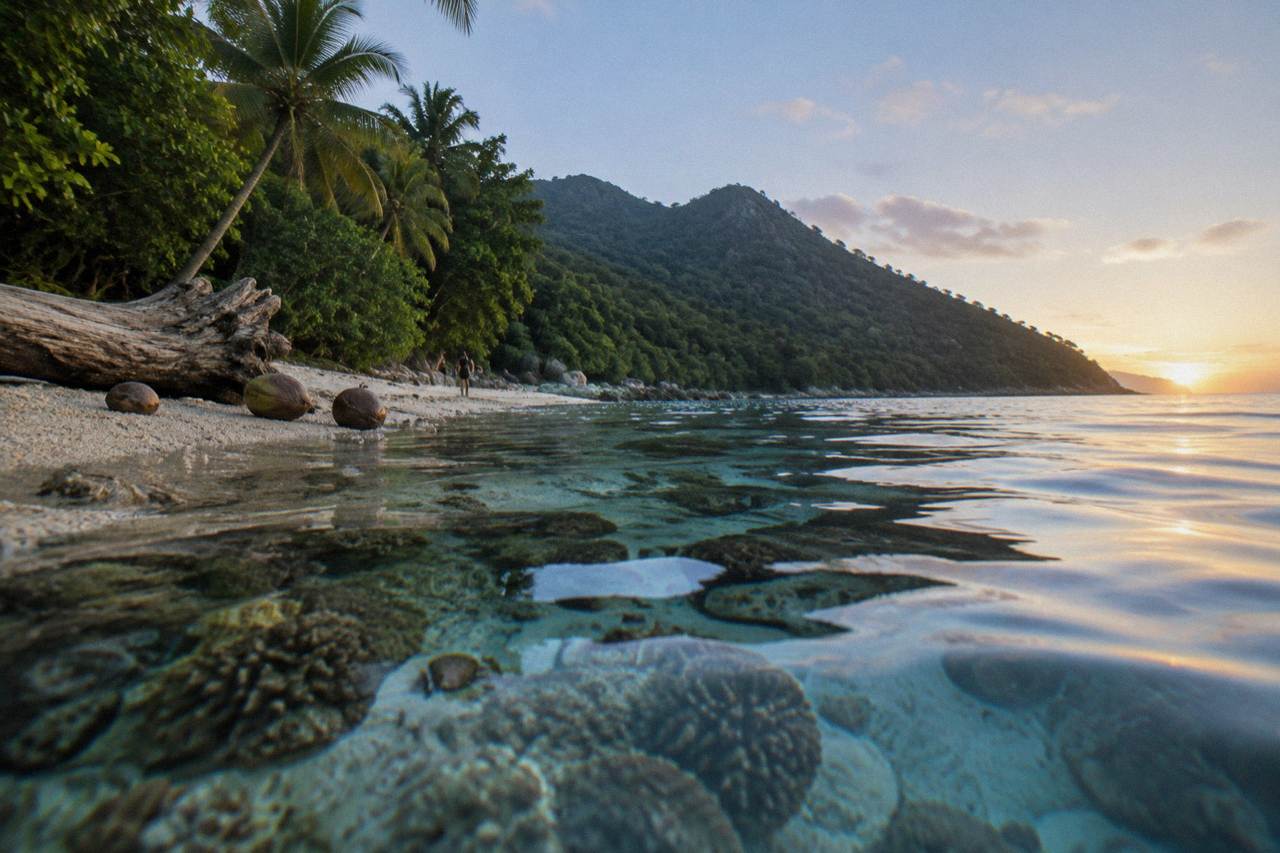
Can You Still Swim In The Great Barrier Reef?
Short answer: yes. Swimming in the Great Barrier Reef remains a normal, daily, bookable experience, with snorkelling off Fitzroy Island's Welcome Bay and Nudey Beach, glass-bottom boats for those who prefer to stay dry, and outer reef pontoons about 90 minutes out of Cairns. The question behind the question is usually about two things: whether the reef is still worth swimming over, and whether the water is safe. Both have real, sourced answers, and neither is a simple yes or no. Once you've settled the swimming question, a look at our roundup of things to do in Cairns before or after your island day makes it easy to build the rest of your trip around that reef outing.
The reef is not a single swimming pool. It is a marine park stretching across a vast stretch of Queensland coast and open ocean, and its condition varies by region and by year. Around Cairns and Fitzroy Island, the relevant region is the Northern Great Barrier Reef, and the latest official monitoring shows hard coral cover there has increased, not collapsed. The Australian Institute of Marine Science reported Northern region hard coral cover of 35.1% in its 2025-26 survey season, up from 30.0% the year before and above the long-term average of 27.0%. Since water clarity and reef access differ from island to island, our comparison of Cairns island day trips from Fitzroy to Green Island helps you pick the launch point that suits your swim.
Safety is a seasonal question rather than a permanent one. Marine stingers, including box jellyfish and Irukandji, are a managed part of tropical North Queensland swimming from roughly November to May, with higher risk from October, and the advice is a stinger suit, which reef operators supply. Cyclone season runs from 1 November to 30 April, and operators cancel or reschedule when conditions warrant. None of that stops the swimming, it just shapes when and how you do it.
The practical decision for most readers is which water to get into: the sheltered fringing reef you can walk to from a Fitzroy Island beach, or the outer reef pontoon reached by catamaran. Every figure in this guide comes from official monitoring or operator listings, including from-prices, durations and the review counts shown on each tour's live booking page.
Can You Still Swim In The Great Barrier Reef?
Yes, you can still swim in the Great Barrier Reef, and you can do the same on a day trip from Cairns. Fitzroy Island sits inside the Great Barrier Reef World Heritage Area with a fringing reef off Welcome Bay and Nudey Beach, and outer reef pontoons run daily from the Cairns marinas. The latest official survey found Northern hard coral cover of 35.1%, up from 30.0% the previous year.
That headline number deserves a plain-English reading. The Australian Institute of Marine Science surveys 121 reefs across the whole marine park each year through its Long-Term Monitoring Program. In the 2025-26 season the Northern region, which covers the reefs off Cairns including the waters around Fitzroy Island, recorded hard coral cover of 35.1%, an increase on the 30.0% of 2025 and comfortably above the long-term average of 27.0%. The report describes this as signalling the start of recovery from the impacts of the 2024 mass bleaching event.
Recovery is not the same as untouched, and an honest page should say so. The same report records that of the 121 surveyed reefs, 16% declined, 56% showed no net change and 28% increased. Crown-of-thorns starfish were detected on 27 reefs, with a fifth wave of outbreaks emerging in the Northern region. A regional coral bleaching event was declared in the Northern and Central regions after a warmer summer, though late-summer monsoon activity reduced sea temperatures and likely limited the severity. Swimming over a recovering reef is still swimming over a reef: fish, coral, turtles where they choose to appear, and the ordinary miracle of a World Heritage ecosystem an hour from a city.
None of the official sources suggest the water is closed, unsafe by default, or off limits. Queensland Parks states plainly that snorkelling in Welcome Bay and off Nudey Beach offers the chance to explore a fringing reef, while warning that snorkelling in other locations around the island may be dangerous due to strong currents. That is a zoning and conditions message, not a health warning. If you are deciding how to get into the water, these three options cover the main ways to do it.
The Moore Reef and Fitzroy Island combo is the outer-reef answer: a full-day catamaran trip to a pontoon with snorkel gear, a lycra suit and a glass-bottom boat tour included, plus free time on Fitzroy Island, from A$337 per person with a 3.9 rating from 49 reviews. The 11am Fitzroy Flyer day trip is the low-friction island answer, with snorkel equipment included from A$129 per person, though it carries only 8 reviews so far. The two-islands day squeezes Fitzroy and Green Island into one 8-hour trip from A$196 per person, 4.1 from 187 reviews.
Is The Water Safe To Swim In?
For most of the year, yes, with ordinary care. The two managed risks are marine stingers, where a stinger suit is advised November to May with higher risk from October, and tropical cyclones, whose season runs 1 November to 30 April. Reef operators supply stinger suits, and boats do not sail in dangerous conditions. Strong currents make snorkelling outside Welcome Bay and Nudey Beach inadvisable.
Marine stingers are the risk most visitors ask about first. Box jellyfish and Irukandji may be present in tropical North Queensland waters year-round, but the higher-risk window runs from October through May, and the standard guidance is to treat November to May as stinger season. The Fitzroy Island Resort FAQ states that stinger suits are available to hire and that vinegar stations stand around the resort. On commercial reef trips, operators provide suits as standard practice for in-water time, so the suit is usually not something you need to source yourself.
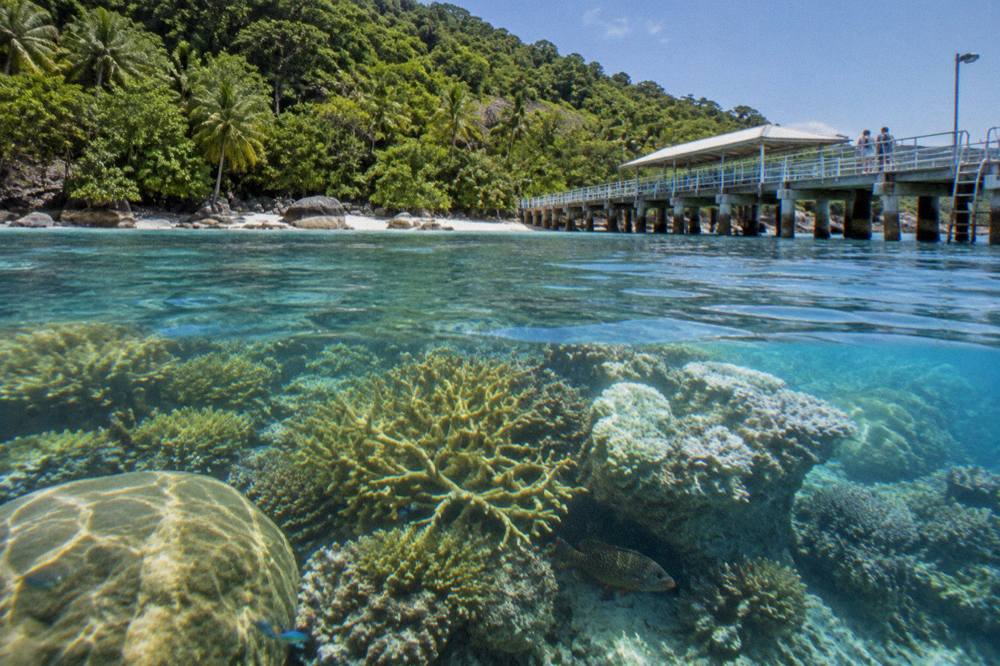
What the stinger advice is not, is a reason to stay out of the water. A full-body lycra stinger suit removes the practical risk from box jellyfish and Irukandji exposure for snorkellers, which is why a typical reef day from Cairns involves signing up for one, wearing it, and swimming anyway. Dry-season swimming from June to October carries lower stinger risk, though the cautious formulation stays the same: suits are advised in the warmer months, and sensible swimmers follow the local guidance on the day.
Cyclones are the second seasonal factor. The Australian cyclone season runs from 1 November to 30 April, and Queensland averages around three to four cyclones per season. A cyclone near Cairns is rare on any given week, but it does mean summer and autumn trips carry a small chance of cancellation, and every listed tour on this site carries a free cancellation policy with cutoffs shown on the operator's booking page. The Bureau of Meteorology publishes forecasts and warnings, and operators make the call on sailing, not passengers.
There is one thing this site will not tell you, because no official source states it: whether the Welcome Bay swimming area is netted. That detail is not verified, so it does not appear here. What is verified is Queensland Parks' zoning message: the designated snorkelling spots off Fitzroy Island are Welcome Bay and Nudey Beach, and other locations around the island may be dangerous due to strong currents. Swim where the park says to swim.
Wondering how a full water day actually works? The Moore Reef and Fitzroy Island combo includes snorkel gear with lycra suit and life jacket if required, a glass-bottom boat tour, a semi-submersible tour subject to wind conditions, an underwater observatory, an enclosed ocean pool for kids and a buffet lunch, all from A$337 per person. Free cancellation applies up to 24 hours before start.
What Is The Official Reef Health Data Saying?
The official picture for the Northern Great Barrier Reef, the region that includes Cairns and Fitzroy Island, is one of measured recovery. Northern hard coral cover is 35.1%, up from 30.0% in 2025 and above the 27.0% long-term average. August 2026 sea surface temperatures were close to long-term averages, with only low-level bleaching recorded on a handful of Northern reefs.
Two agencies do the monitoring that matters here. The Australian Institute of Marine Science runs the Long-Term Monitoring Program, and the Great Barrier Reef Marine Park Authority publishes reef health updates from its own survey program. For swimmers and snorkellers, their findings translate into a few practical takeaways.
| Measure | Northern GBR result | Reading for swimmers |
|---|---|---|
| Hard coral cover (2025-26) | 35.1%, up from 30.0% | More coral to swim over than last year |
| Long-term average cover | 27.0% | Current cover is well above it |
| Reefs surveyed | 121 across the whole park | Regional averages, not single-site scores |
| Reefs that declined | 16% of those surveyed | Recovery is uneven reef to reef |
| August 2026 sea temperature | Close to long-term average | No unusual heat stress at survey time |
| Northern reefs with low bleaching | 7 reefs in August surveys | Low-level, not a closure event |
The Great Barrier Reef Marine Park Authority's September 2026 update reported August sea surface temperatures close to long-term averages across the Northern region, 0.1 to 0.3 C above, with the Bureau of Meteorology forecasting similar conditions through September and October. Its August surveys, 449 of them across 42 reefs, recorded low bleaching levels on seven Northern reefs. Crown-of-thorns starfish control continued, with 47 reefs actioned. An El Nino pattern was described as firmly established and expected to strengthen, which is the kind of signal the agencies watch between survey seasons.
One caution about how to use these numbers: they are regional. No source publishes a Fitzroy-Island-specific coral cover figure or a Nudey Beach bleaching score, and this site does not invent one. The fringing reef off the island sits within the Northern region's story of recovery, and general descriptions of Welcome Bay and Nudey Beach note fringing coral accessible from shore. What any single snorkeller sees on any single day depends on tide, weather, recent rain and the patch of reef in front of them, which is why the reef-restoration nursery established in Welcome Bay in late 2017, growing corals for out-planting, matters as a sign of local stewardship rather than a guarantee of what you will see.
Where Can You Actually Swim From Fitzroy Island?
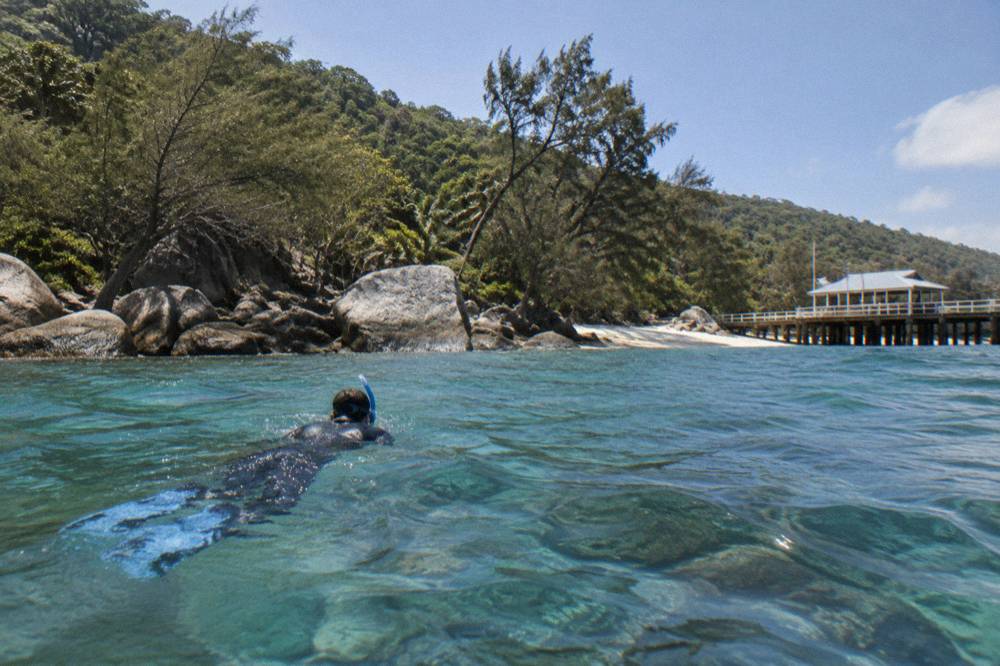
The two designated snorkelling spots on Fitzroy Island are Welcome Bay and Nudey Beach, both reachable on foot from the jetty, with Nudey Beach a 1.2 km return walk. Queensland Parks names these as the places to explore the fringing reef and warns that other locations around the island may be dangerous due to strong currents. The island's waters sit in two marine parks.
Welcome Bay is where the ferries arrive, so it is the default swimming spot for day trippers: coral beach, sheltered water, and the fringing reef a short swim from shore. Nudey Beach is the one with the reputation, ranked the number one spot on Brad Farmer's 2018 list of Australia's 101 Best Beaches according to the Fitzroy Island Adventures page, and reached by a moderate 45-minute walk that is predominantly bitumen with steep stone steps and boulders. Our Nudey Beach guide covers the walk and what to expect at the far end.
Neither spot requires a tour to swim at, once you are on the island. Every ferry listing on this site includes access to the national park walking trails and beaches, so a basic return ferry ticket is also a swimming ticket. Shore snorkelling in the zones Queensland Parks names is one of the genuinely free things to do once you have landed, with your own gear. What the ferry ticket does not include is equipment: snorkel hire is an optional extra on most listings, selectable at booking on the Sunlover and Fitzroy Island Adventures products, and the cheapest half-day listings state plainly that equipment is not included. If you are swimming with your own gear, our guide on swimming safety at Fitzroy Island explains the safe zones, stinger season, and which tours bundle the equipment.
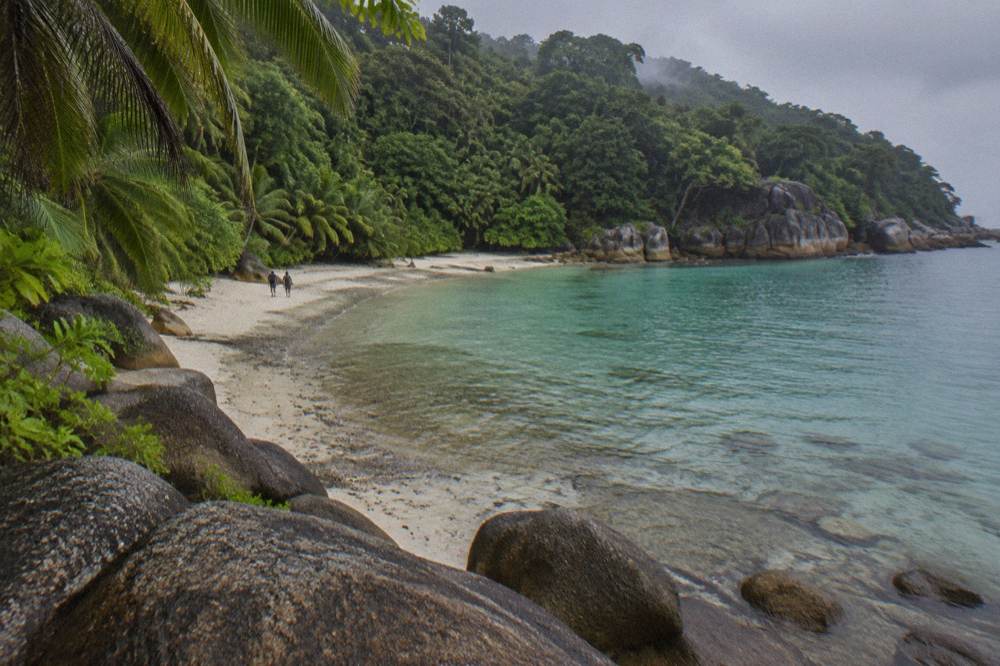
The trade-off is between convenience and coral. Inshore fringing reefs near a city and a resort get more swimmer traffic than remote outer reefs, and general descriptions of the Fitzroy Island sites note that coral around the Welcome Bay side is more affected, while Nudey Beach's rocky headland areas often show better cover. Neither statement is a survey result. If swimming over the strongest reef scenery is the priority, the outer reef pontoon products exist precisely for that: the Sunlover Moore Reef cruise runs about 90 minutes each way with roughly 4 hours at the reef, versus the 45-minute Fitzroy Island crossing.
What Does Swimming Look Like On A Tour?
On a Fitzroy Island day trip, swimming is self-directed: you get 4.5 to 8 hours on the island depending on the listing, and you snorkel Welcome Bay or Nudey Beach at your own pace. On an outer reef pontoon day, swimming is structured: a dedicated snorkelling site off the platform, gear included, with semi-submersibles and glass-bottom boats as the dry alternatives.
The island day is the simpler product and the cheaper one. The Fitzroy Island Adventures full day, from A$108 per person and the most reviewed listing on this roster at 4.5 from 1,990 reviews, gives up to 7 hours on the island with snorkel gear or a glass-bottom boat activity as optional extras selected at booking. The Sunlover ferry products from A$105 per person work the same way: base fare plus your choice of lunch box, glass-bottom boat or snorkel gear, depending on the option booked. The half-day Flyer products from A$88 per person suit swimmers who want a morning or afternoon in the water without committing a full day.
Guided snorkelling is a middle option worth knowing about. The Snorkel Safari full day, from A$168 per person and carrying a 4.2 rating from 43 reviews, includes a guided snorkel tour at 10:00 AM plus snorkel hire for the whole day until 4:00 PM, so a guide shows you the reef first and you keep the gear afterward. It is a small review pool by roster standards, which is worth knowing before you book, but the structure suits nervous swimmers and first-time snorkellers better than a bare ferry ticket does.
| Product | From price | Time in or on the water | Rating and reviews |
|---|---|---|---|
| Afternoon half-day ferry | A$88 per person | 4.5 hours on island, snorkelling optional | 3.9 from 18 reviews |
| Sunlover ferry, transfer only | A$105 per person | 4.5 to 5.5 hours free time | 4.4 from 256 reviews |
| Fitzroy Island Adventures full day | A$108 per person | Up to 7 hours on island | 4.5 from 1,990 reviews |
| 11am ferry with snorkel gear | A$129 per person | Snorkel equipment included, 7-hour day | 4.0 from 8 reviews |
| Guided Snorkel Safari | A$168 per person | Guided tour plus all-day hire | 4.2 from 43 reviews |
| Moore Reef pontoon plus Fitzroy | A$337 per person | About 4 hours at the reef, then island time | 3.9 from 49 reviews |
The pontoon day answers a different question. The Moore Reef and Fitzroy combo includes snorkel gear with mask, fins, snorkel, lycra suit and life jacket if required, a glass-bottom boat tour, a semi-submersible tour subject to wind conditions, an underwater observatory, an enclosed ocean pool for kids and a buffet lunch, with free time on Fitzroy Island on the way home. Extras like guided snorkel tours, helmet dives and a short helicopter flight cost more, and a fuel surcharge applies. It is the fullest water day on the roster and the one this article features, because a reader asking whether they can still swim the reef is exactly the reader this product serves.
When Is The Best Time Of Year To Swim?
June to October is the calmer, drier, lower-stinger-risk window around Cairns and Fitzroy Island, with monthly rainfall dropping to between 26 and 47 mm from June through September. November to May is stinger season, advised rather than prohibited, and 1 November to 30 April is cyclone season. You can swim year-round; the gear and the planning change.
The Bureau of Meteorology's long-term averages for Cairns tell the seasonal story cleanly. Monthly rainfall falls from a wet-season peak of 404.8 mm in January, 437.5 mm in February and 422.1 mm in March to 45.5 mm in June, 33.2 mm in July and 26.5 mm in August, with 4.9 rain days of a millimetre or more in both August and September. Daytime maxima in that dry window sit around 25.9 to 29.7 C, and minima around 17 to 21 C. For swimmers, that means clear-sky days, calmer inshore water and no stinger-suit obligation, though many snorkellers wear thin lycra anyway for sun protection.
The warmer months flip the calculation rather than cancel it. Rainfall climbs back through October and November, stinger risk rises from October with suits advised November to May, and the cyclone season opens on 1 November. The compensations are warmer water, fewer crowds and the fact that every operator runs through the season with suits supplied. A summer snorkel off Nudey Beach in a full lycra suit is an entirely ordinary North Queensland experience. Our weather and best time to visit guide works through the month-by-month detail, and the stinger season and swimming guide covers suit logistics specifically.
One honest caveat on timing: reef conditions are reported regionally and seasonally, not predicted for your booking date. The agencies' surveys describe what was measured in past months; the day you swim depends on that week's wind, tide and rainfall. Calm dry-season mornings are the statistical best bet for clear inshore water, and a quiet day is possible in any month, which is why flexible bookings with free cancellation are worth preferring in the wetter half of the year.
Do You Need A Stinger Suit Or Other Gear?
From November to May, yes, a stinger suit is the standing advice for swimming and snorkelling around Cairns and Fitzroy Island, with higher risk from October. On commercial reef tours the suit is generally supplied as part of the in-water equipment. Off the beach on Fitzroy Island, suits are available to hire from the resort. Outside the season, gear is optional.
The suit question resolves differently depending on how you swim. On a pontoon day, the Moore Reef product lists a lycra suit and life jacket if required within its snorkel gear inclusion, so the decision is made for you. On the Fitzroy Flyer day trip with snorkel equipment, the listing states the use of snorkelling equipment is included, and the resort's FAQ confirms stinger suit hire on the island for those who want it in season. On a bare ferry-only ticket, you bring or hire your own, and the vinegar stations around the resort are the backup layer of the local safety system.
Beyond the suit, the packing list for a swimming day is short: reef-safe sun protection, a rashie or lycra for the sun, water shoes for the coral beaches, which are loose coral and shell rather than soft sand, and cash or card for island food. Our what to bring guide itemises it. What you should not bring is an expectation of gear included on a cheap ticket: the two A$88 half-day listings both state that equipment beyond the ferry is not included, so the low headline price buys the crossing and the beaches, not the snorkel set.
Two rules frame all in-water time. The Great Barrier Reef Marine Park Authority asks snorkellers not to touch, stand on or chase marine life including turtles, and to keep a respectful distance. Queensland Parks asks swimmers to stay within the designated zones and to check park alerts before walking or swimming, since tracks and conditions can change after severe weather. Neither rule restricts ordinary swimming; both keep the reef swimmable for the people after you.
What Does It Cost To Swim The Reef From Cairns?
The full roster of Fitzroy Island and reef swimming products on this site runs from A$88 to A$460 per person. A half-day island swim starts at A$88, full-day island ferry products start at A$105, a guided snorkel day is from A$168, an outer reef plus island combo is from A$337, and two-day reef and island packages run from A$375.
The floor of the range is the half-day Flyer product, morning or afternoon, each from A$88 per person with the return ferry included and 4.5 to 5 hours on the island. It is a ferry-and-beaches ticket: snorkelling is possible, but equipment is not included, and both listings carry small review pools of 15 and 18 reviews. One step up, the full-day ferry products from A$105 to A$109 per person across the Sunlover, Fitzroy Island Adventures and Flyer rosters give a full island day with gear and lunch as selectable options, and the most reviewed of them, the Fitzroy Island Adventures full day, carries 4.5 from 1,990 reviews.
Two charges sit around the ticket price that no listing on this site fully itemises. The Environmental Management Charge, the reef tax collected by permit holders, is A$8.50 per person for a full day and A$4.25 for a part day, rising to A$9.00 and A$4.50 from 1 April 2027, but no roster listing states whether it is inside the printed fare, so check the operator's booking page before assuming. Separately, Fitzroy Island Adventures states that a A$5 per person levy for island facilities licence fees and admin is included inside its own fare. Neither is a reason to skip the swim; both are reasons to read the checkout page.
| Budget bracket | What you get | Listings in bracket |
|---|---|---|
| A$88 to A$110 | Half-day or full-day ferry, beaches and walks, extras selectable | 8 ferry and day-pass listings |
| A$129 to A$202 | Snorkel gear or lunch included, or a guided snorkel safari | 3 snorkel and glass-bottom listings |
| A$196 | Two islands, Fitzroy plus Green, in one day | 2 two-island listings |
| A$337 | Outer reef pontoon day plus Fitzroy Island free time | 1 combo listing |
| A$375 to A$460 | Two-day packages pairing the outer reef with Fitzroy | 2 two-day listings |
At the top of the range, the two-day packages suit visitors who want both the outer reef and the island without the same-day rush. The Reef Magic and Dreamtime two-day product, from A$375 per person and rated 4.7 from 92 reviews, pairs a reef cruise with buffet lunch on day one with a Fitzroy Island day including a glass-bottom boat tour and packed picnic lunch on day two. The pontoon version at A$460 per person adds a semi-submarine on day one but carries only 11 reviews. Both include snorkelling equipment across both days.
The Honest Summary
Swimming in the Great Barrier Reef from Cairns and Fitzroy Island is fully available, seasonally managed and officially documented as recovering, with Northern hard coral cover at 35.1% and above the 27.0% long-term average. The remaining decisions for a swimmer are practical ones: island shore snorkelling or an outer reef pontoon, dry season or stinger season, bare ferry ticket or gear-included tour.
Swimming in the Great Barrier Reef is not a nostalgia act. The official monitoring says the Northern region's coral cover is above its long-term average and rising, the marine park authority reports sea temperatures near normal with only low-level bleaching on a handful of surveyed reefs, and the boats run daily from the Cairns terminals. What has genuinely changed is the burden of knowledge on the visitor: stinger season is real and managed with suits, cyclone season shapes summer bookings, and the reef's recovery is uneven, which is exactly why the agencies measure it reef by reef rather than declaring it saved or lost.
For a swimming-first day trip from Cairns, the decision is honestly simple. If you want to walk into the water off a beach inside a national park, take a Fitzroy Island ferry ticket and add snorkel gear, or book the guided snorkel safari if you want a guide's eyes on your first hour. If you want the biggest reef for your swimming effort, take the pontoon day. Either way, the water is open, and as Fitzroy Island Tours reports across this site, the choice is about format and season, not permission.
Common Questions About Swimming In The Great Barrier Reef
Can You Still Swim In The Great Barrier Reef?
Yes. Swimming and snorkelling in the Great Barrier Reef remain daily, bookable experiences from Cairns, from shore snorkelling at Fitzroy Island's Welcome Bay and Nudey Beach to outer reef pontoon days. Northern region hard coral cover is 35.1% and above its long-term average, and no official source restricts recreational swimming.
Is It Safe To Swim In The Reef In Summer?
Yes, with a stinger suit. Stinger season runs roughly November to May with higher risk from October, and suits are advised for swimming and snorkelling in those months. Reef operators supply suits as part of in-water equipment, and the resort on Fitzroy Island offers hire. Cyclone season from 1 November to 30 April can occasionally cancel sailings, and listed tours carry free cancellation policies.
Where Can You Swim On Fitzroy Island?
Queensland Parks names Welcome Bay and Nudey Beach as the snorkelling spots, both with fringing reef. Nudey Beach is reached by a 1.2 km return walk. Snorkelling in other locations around the island may be dangerous due to strong currents, so swimmers stay in the designated zones.
Is The Coral Still Alive Around Cairns?
The official monitoring says the Northern Great Barrier Reef is recovering: hard coral cover of 35.1% in 2025-26, up from 30.0% the year before and above the 27.0% long-term average, described as the start of recovery from the 2024 mass bleaching event. Recovery is uneven, with 16% of surveyed reefs declining and 28% increasing.
Do You Need To Book A Tour To Swim The Reef?
No. A ferry ticket to Fitzroy Island from A$88 per person includes access to the beaches and national park, and you can shore snorkel Welcome Bay or Nudey Beach with your own gear. Tours add value through included equipment, guided snorkelling, glass-bottom boats and outer reef access that a ferry ticket cannot reach.
What Is The Cheapest Way To Swim At Fitzroy Island?
The cheapest listed option is a half-day Fitzroy Flyer return ferry from A$88 per person, which includes the crossing and 4.5 to 5 hours on the island. Snorkel equipment is not included on that listing, so budget for hire or bring your own. The cheapest listings with snorkel gear included start at A$129 per person.