Fitzroy Island Snorkelling: Where, What You See And Gear Hire
Fitzroy Island sits inside the Great Barrier Reef World Heritage Area, and its fringing reef is close enough to shore that you can snorkel it on a day trip from Cairns without a liveaboard or an outer-reef pontoon. Here is where to get in the water, what the tours cost, and what the official sources actually say about coral and marine life.
Short answer
Snorkel in Welcome Bay or off Nudey Beach, the two zones Queensland Parks names for safe shore snorkelling at Fitzroy Island. Day trips from Cairns run from A$105 per person; snorkel-included listings run from A$129 to A$202 per person. A stinger suit is advised November to May, with higher risk from October, and no operator can guarantee a turtle sighting.
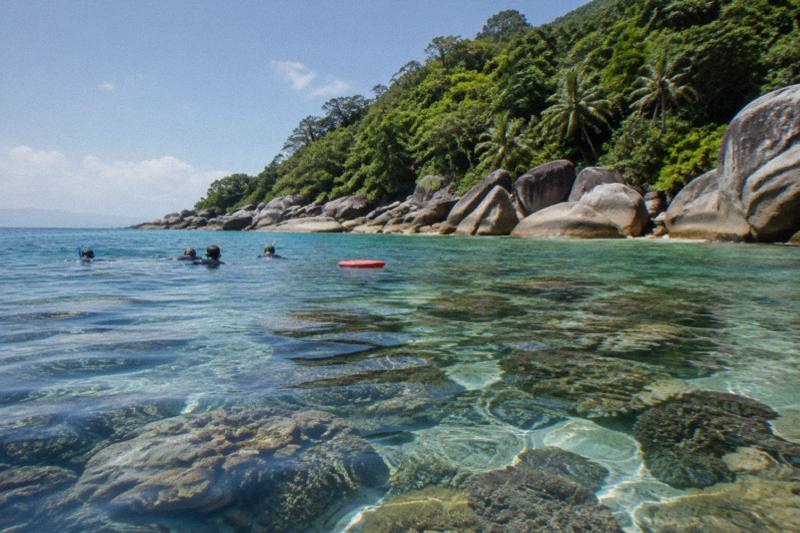
Fitzroy Island is one of the few places on the Great Barrier Reef where the snorkelling starts a short walk from where the ferry ties up. The island sits inside the Great Barrier Reef World Heritage Area and two overlapping marine parks, and its fringing reef grows right against the granite in Welcome Bay and around the headland at Nudey Beach. That geography is the whole reason day trips from Cairns work so well here: a 45 minute crossing, then fins on.
This guide covers the parts of the question that actually decide your day. Where you are allowed and safe to snorkel, because Queensland Parks is specific about it. What the water holds and what nobody can promise. What a snorkel day costs across the listings on this site, from the A$88 half days to the A$202 all-inclusive package. And the two questions people ask in the booking window: whether a stinger suit is needed, and whether the coral is worth the trip. The 11am ferry day trip with snorkel equipment included, the guided snorkel safari and the Best of Fitzroy package are the three listings this article compares throughout, because they are the three ways to buy a snorkel day here.
Where Can You Snorkel At Fitzroy Island?
Queensland Parks names two snorkelling locations at Fitzroy Island: Welcome Bay, where the ferry arrives, and the water off Nudey Beach, reached by a 1.2 km return walking track. Snorkelling elsewhere around the island may be dangerous because of strong currents, so the park's own guidance is to treat these two zones as the whole of your snorkelling plan for the day.
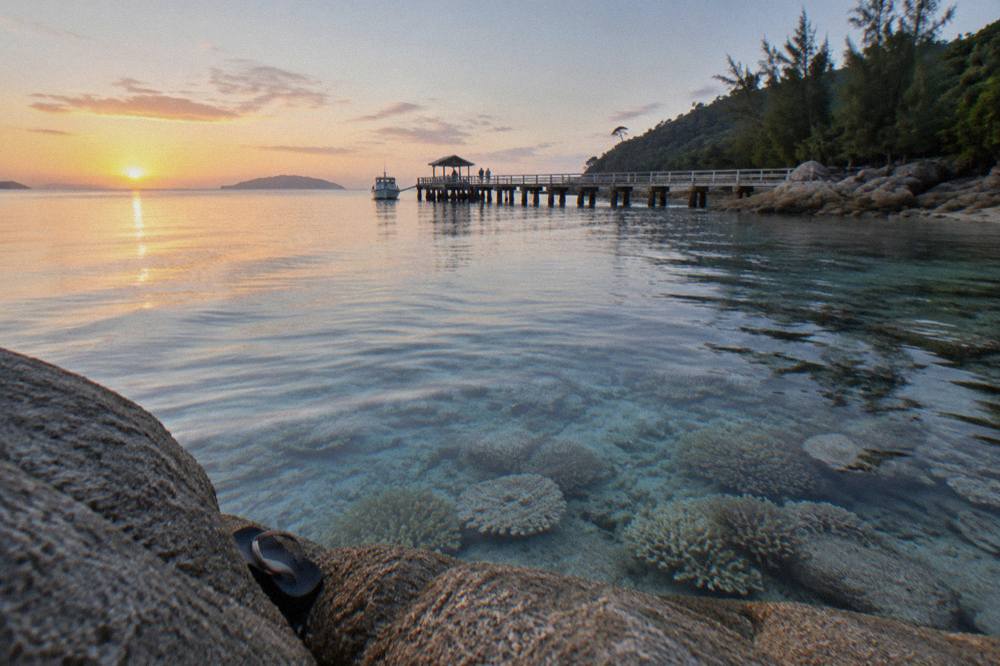
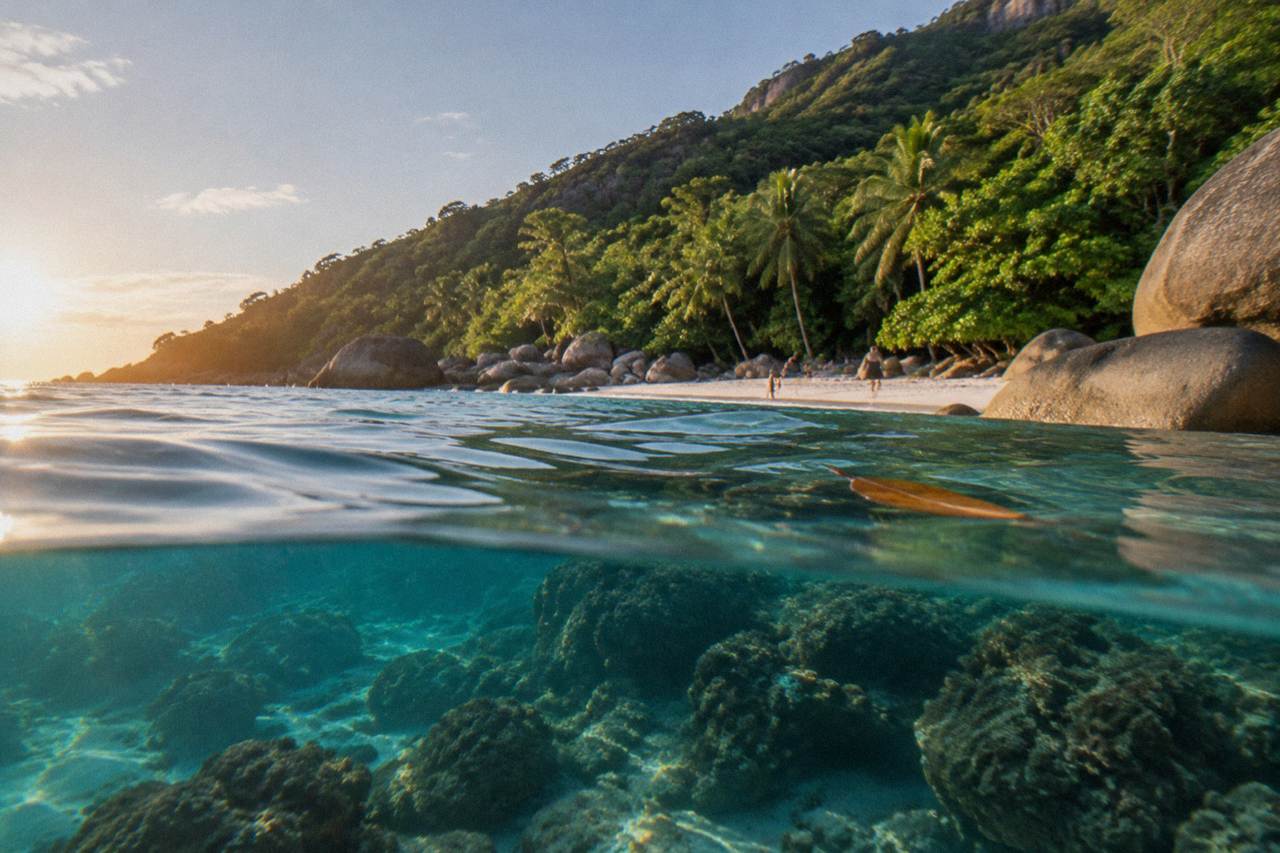
Welcome Bay is the practical choice. You step off the jetty, and the fringing reef begins within a short swim of the beach, which Queensland Parks describes as loose coral rather than sand, so reef shoes or fins you can walk in are genuinely useful. The bay is sheltered by the island's shape, which is why the ferry berths there, and descriptions of the site note that the coral closest to the beach sees the most traffic. The further out you swim toward the headland, the healthier it generally looks.
Nudey Beach is the second zone, and most people who make the walk call it the better one. The track is moderate going: 1.2 km return, about 45 minutes, predominantly bitumen with steep stone steps and boulders for the last stretch. The reward is a smaller beach with coral growing around the rocky headland, and Queensland Parks describes both beaches as offering the chance to explore a fringing reef. The word chance is doing honest work there, and we will come back to it in the next section.
Two rules frame everything. First, the park service warns that snorkelling in other locations around the island may be dangerous due to strong currents, so the exposed outer shores are not a free-for-all. Second, the island's waters sit inside the Great Barrier Reef Coast Marine Park and the Great Barrier Reef Marine Park, which means the Great Barrier Reef Marine Park Authority's responsible reef practices apply to every snorkeller: look, do not touch coral, give wildlife room, and take nothing. The park page also notes public moorings for arriving vessels, which matters if you arrive by private boat rather than the ferry.
| Snorkel zone | How you get there | What Queensland Parks says | Best suited to |
|---|---|---|---|
| Welcome Bay | Directly from the ferry jetty, short swim from the beach | Fringing reef to explore; sheltered arrival bay | First-timers, families, half-day visitors |
| Nudey Beach | 1.2 km return walking track, moderate, about 45 min | Fringing reef off the beach; coral around rocky headland | Confident swimmers, photographers |
| Other island shores | Not recommended | Snorkelling may be dangerous due to strong currents | Avoid unless locally advised |
If you are building the whole day around the water rather than a swim between walks, the Fitzroy Island day trip options compared guide breaks down how the ferry-only, snorkel-included and all-inclusive listings differ, hour by hour.
What Might You See Snorkelling At Fitzroy Island?
Expect reef fish, hard and soft corals, and the possibility of green and hawksbill turtles, rays and the occasional small reef shark. No operator or official source promises any of it: sightings at Fitzroy Island are wild and variable, and the official language is "the chance to explore a fringing reef", never a guarantee of an animal.
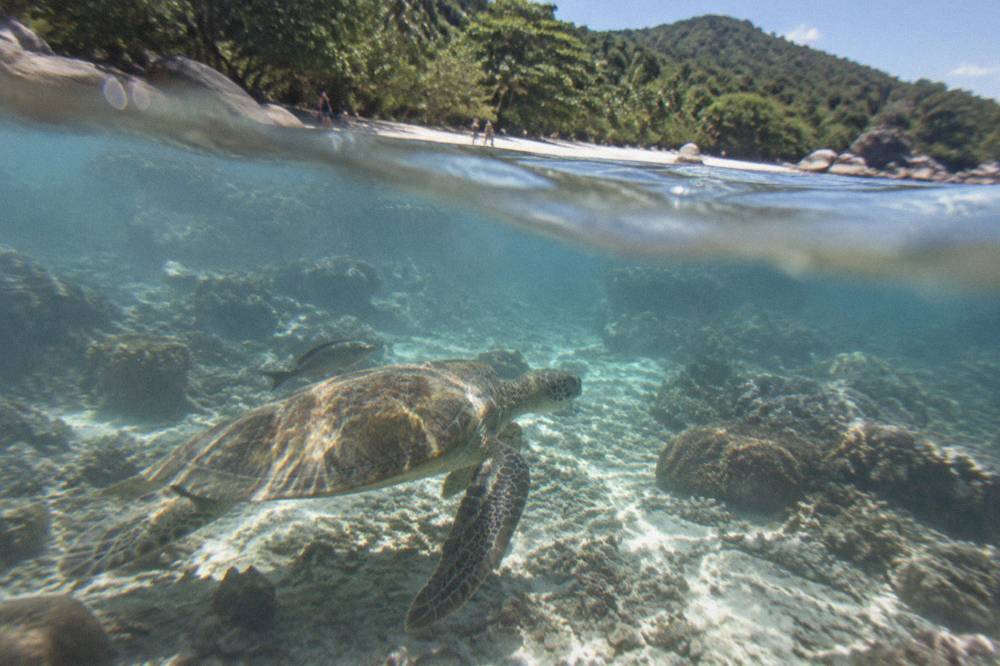
That caution is not hedging for its own sake, it is the difference between a page you can trust and one you cannot. Turtles are the headline species people book for, and there is a real turtle story on this island: the Cairns Turtle Rehabilitation Centre operates on Fitzroy Island itself, and a rehabilitated flatback turtle nicknamed Jelly was released from the island after care by centre volunteers, as reported by Newsport. Wild green turtles are described in general tourism material around the island's snorkelling areas, and anecdotal guest reports regularly mention them. None of that amounts to a booking guarantee, and no listing on this site promises one. A quiet day is a real possibility, and the honest framing is that the reef, not any single animal, is what you are buying.
The same applies to rays and sharks. General descriptions of the island's snorkelling areas note rays and occasional small sharks, but no dated, verifiable sighting data exists for the 2026 season, and we will not invent a percentage. The deeper guide to the question is the turtles at Fitzroy Island piece, which separates what the rehabilitation centre does from what a snorkeller might encounter.
What you can hold to is the habitat. A fringing reef grows around both named zones, coral bommies sit close enough to the surface that light floods them, and the fish community follows the coral: the usual parrotfish, wrasse, damselfish and butterflyfish of inshore Great Barrier Reef sites. Around the rocky points at Nudey Beach, where fewer people swim, descriptions note better coral coverage on the reef's quieter flanks.
There is also a restoration story worth knowing. A coral nursery project run in the Welcome Bay and Bird Rock area has been growing and out-planting corals since late 2017, focused on resilient colonies, with a stated long-term goal of planting a million corals. The resort describes the project on its own pages. You may snorkel over nursery sites without knowing it, which is a good reason to keep fins off the coral: out-planted fragments are exactly the colonies a careless kick can undo.
When you do meet a turtle, the rules change from courtesy to law. The Marine Park Authority's guidance around turtles is explicit: never touch, grab, lean on or feed them, approach slowly or stay neutral, and do not pursue or encircle. That applies to snorkellers and to the glass-bottom boat equally, and it is the single most useful thing to know before you get in the water.
How Much Does Snorkelling At Fitzroy Island Cost?
A ferry-only day trip to Fitzroy Island starts at A$105 per person for a full day, or A$88 for the half days. Adding snorkelling, the listings on this site run from A$129 per person for the 11am ferry day with gear included, A$168 for the guided snorkel safari, to A$202 for the Best of Fitzroy package with lunch, gear and a glass-bottom boat tour.
That spread is the real decision, and it comes down to what you want your hands free to do. The three listings below are the ones this site features for a snorkel-focused day, and they cover the three sensible positions: a relaxed independent day with gear in hand, a guided safari with a leader in the water, and a fully catered package.
The cheapest entry point into the water is honestly not a tour at all, it is a ferry ticket. The half days on the Fitzroy Flyer run from A$88 per person with the return ferry included, but note their snorkel inclusions: the morning half day lists a snorkel activity with equipment not included, and the afternoon half day lists snorkelling opportunities without gear. If you have your own mask and fins, those listings are the budget route. If you do not, the arithmetic changes fast, because hire is bought separately.
The 11am ferry day is the quiet bargain of the middle tier: from A$129 per person, 7 hours, with the use of snorkelling equipment included rather than rented on the day. It is a small-review listing, 4.0 from 8 reviews at the time of writing, so treat the rating as a thin sample rather than a verdict. What the listing promises on paper is concrete: the 11am departure out, the 5pm ferry back, and gear for the whole time between. For a reader weighing the snorkel day, this is the one-click-from-the-water option, and you can Check availability beside the full listing page.
One cost nobody puts on the checkout screen is the Environmental Management Charge, the reef tax collected inside Great Barrier Reef Marine Park permits. It is A$8.50 per person for a full day and A$4.25 for a part day, rising to A$9.00 and A$4.50 from 1 April 2027. No listing on this site states whether the charge is inside its fare, so the honest answer is to check the booking page before you pay. Fitzroy Island Adventures separately states a A$5 per person facilities levy inside its own published fare.
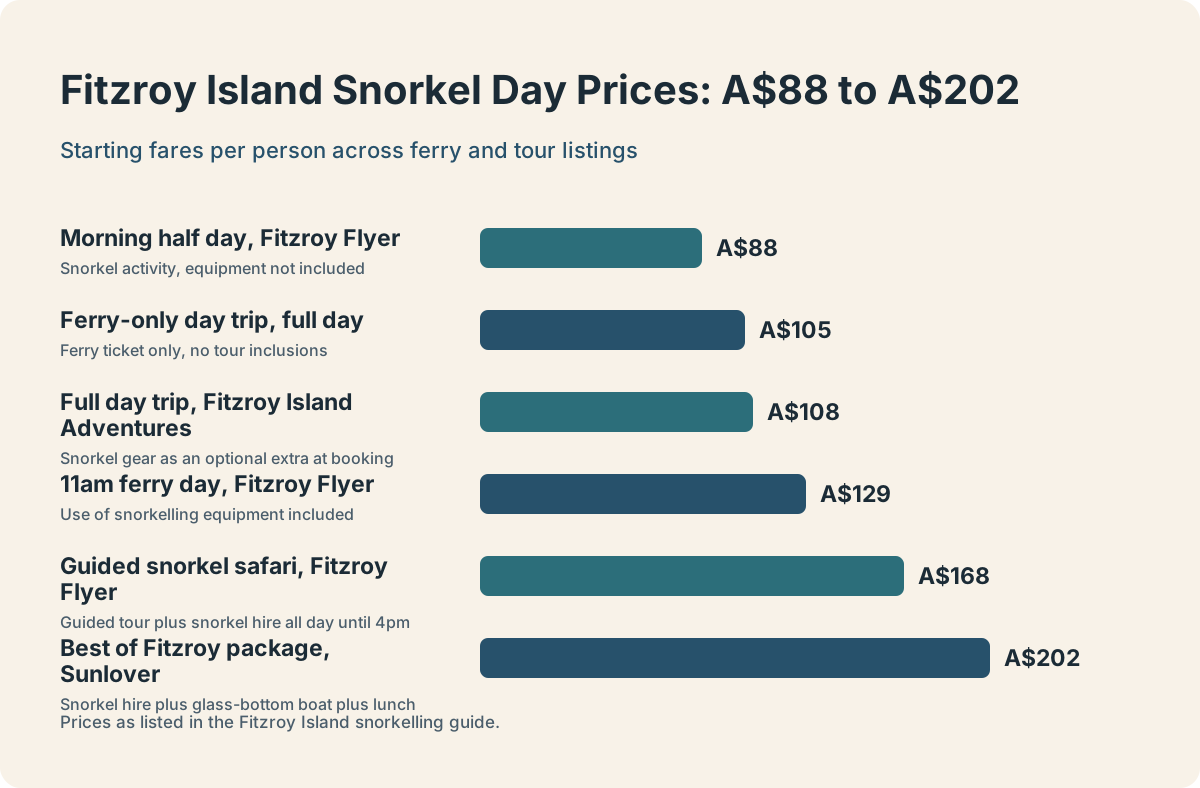
| Listing | From price pp | Snorkel inclusion | Rating and reviews | Day length |
|---|---|---|---|---|
| 11am ferry day, Fitzroy Flyer | A$129 | Use of snorkelling equipment included | 4.0 from 8 reviews | 7 hours |
| Guided snorkel safari, Fitzroy Flyer | A$168 | Guided tour plus snorkel hire all day until 4pm | 4.2 from 43 reviews | 10 hours |
| Best of Fitzroy, Sunlover | A$202 | Snorkel hire plus glass-bottom boat plus lunch | 3.9 from 17 reviews | 6h15 to 7h45 |
| Morning half day, Fitzroy Flyer | A$88 | Snorkel activity, equipment not included | 4.1 from 15 reviews | 5 hours |
| Full day trip, Fitzroy Island Adventures | A$108 | Snorkel gear as an optional extra at booking | 4.5 from 1990 reviews | 8 hours |
If your day is more about seeing the reef than swimming it, the glass-bottom boat is the dry alternative, and the resort's own published fare for it is A$29 adult for a 45 minute trip, alongside the tour-package versions covered in the glass-bottom boat guide.
Do You Need A Guided Snorkel Safari At Fitzroy Island?
You do not need a guide to snorkel Fitzroy Island, but the guided snorkel safari, from A$168 per person with hire gear included all day, suits weaker swimmers, first-time snorkellers and anyone who wants the reef interpreted rather than just swum. Strong swimmers who just want gear will save money on the A$129 gear-included ferry day.
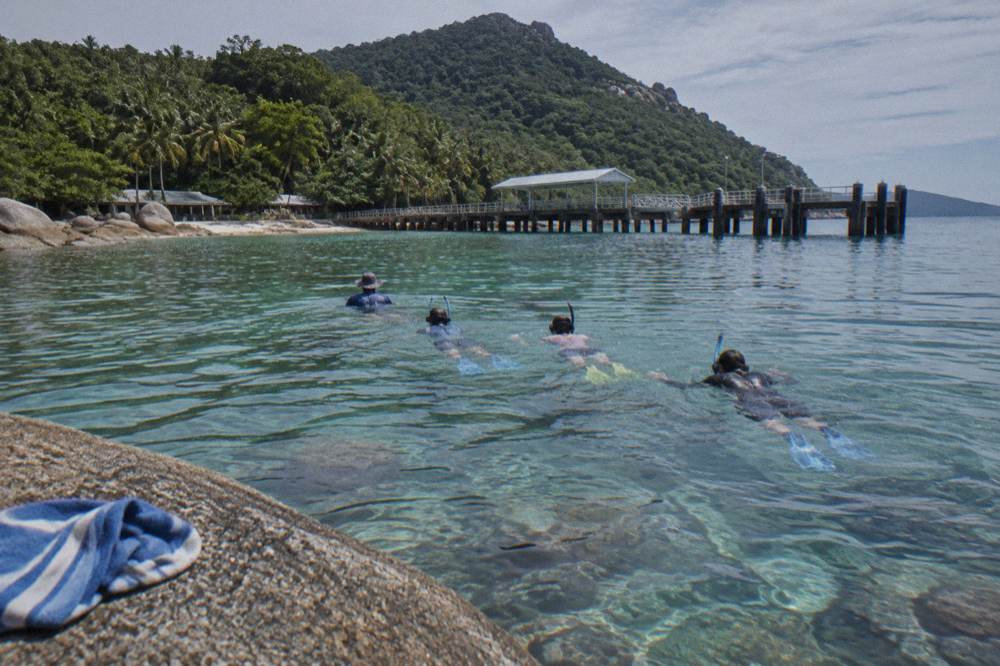
The safari is a real product with a real structure: a guided Snorkel Safari tour at 10am, snorkel hire that stays yours until 4pm, the return Fitzroy Flyer transfers, and roughly 8 hours on the island. It runs from A$168 per person and carries a 4.2 rating from 43 reviews, a modest pool but not an empty one. The value argument is the guide in the water. Someone who knows where the coral bommies are, who can point out a well-camouflaged critter you would swim straight past, and who manages the group's spacing over fragile coral, changes what the hour feels like.
The counter-argument is the shore itself. Welcome Bay's reef starts close to the beach, the bay is sheltered, and Queensland Parks' framing of both beaches is that independent snorkellers can explore the fringing reef there. If you are comfortable in the water and want to float at your own pace, the guided hour is a nice-to-have, not a need-to-have. That is the position of the A$129 day with gear included, and of the ferry-only listings for anyone travelling with their own kit.
The third position is the package buyer. The Best of Fitzroy day folds snorkel hire, a glass-bottom boat tour and a picnic lunch box into one fare from A$202 per person, rated 3.9 from 17 reviews. It costs the most of the three, and it buys the day where nothing is decided on the jetty: no hire queue, no lunch order, no separate boat booking. For a family or a short-on-time traveller, the premium is the product.
Do You Need A Stinger Suit Snorkelling At Fitzroy Island?
A stinger suit is advised from November to May, with higher risk from October, because box jellyfish and Irukandji may be present around Fitzroy Island year-round and the risk peaks in the warm months. The resort states suits are available to hire, and several listings include stinger suit use as a selectable option at booking.
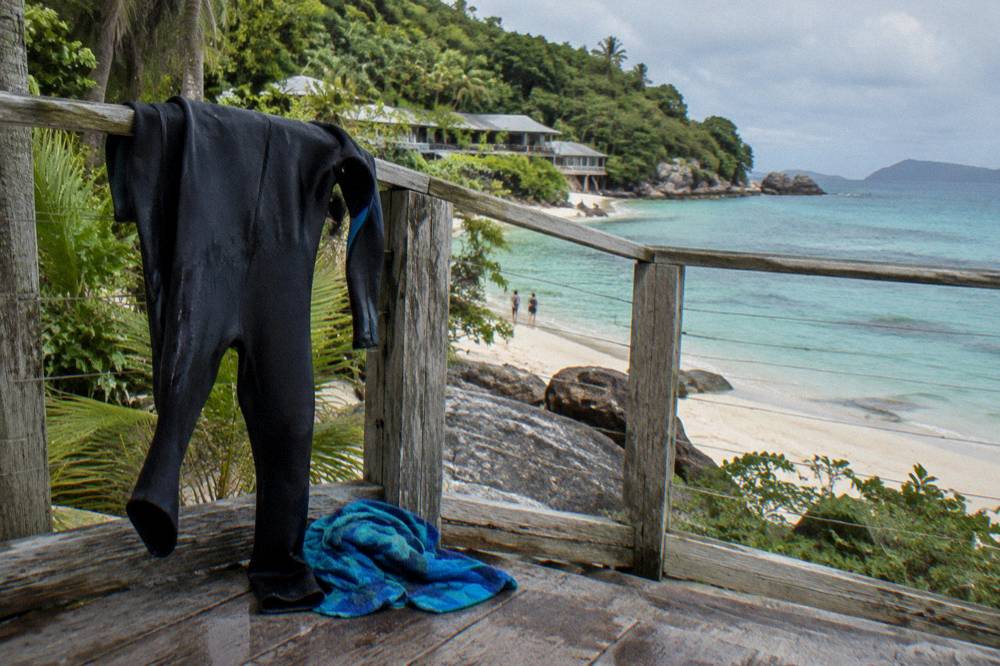
This is the one topic where being definite matters more than being reassuring. The resort's own FAQ language is that box jellyfish and Irukandji might be present year-round, but there is a higher risk between October and May, and it advises wearing stinger suits when swimming or snorkelling. Cairns-region tourism guidance frames the season as roughly November to May. Put together, the planning rule we print is: stinger suit advised November to May, higher risk from October. There is no stinger-free month, and any page that offers you one is guessing.
What we will not tell you is whether Welcome Bay's swimming area is netted, because no official statement on that exists. If a netted enclosure is what makes you comfortable in the water, check with the resort or your operator before you book, and do not accept a blog's word for it.
Whether a suit is in your fare depends entirely on the listing. The Fitzroy Island Adventures day tour lists use of a stinger suit as an option selected at booking, the same structure as its snorkel gear and glass-bottom boat options. The gear-included 11am day covers snorkelling equipment and says nothing about a suit. In every case, the suit question is worth one line to the operator before the day. There is more depth, including the vinegar stations placed around the resort, in the stinger season and swimming guide.
| Season | Months | Stinger suit advice | What it means for your booking |
|---|---|---|---|
| Higher risk | October to November shoulder | Suit strongly advised, higher risk from October | Prefer listings with suit as an option, or hire on the island |
| Peak season | November to May | Suit advised whenever you swim or snorkel | Check suit inclusion or hire before you go |
| Cooler months | June to September | Risk lower but not zero, suits still available | Most snorkellers go without; hire remains an option |
Is The Coral At Fitzroy Island Healthy?
The most recent official monitoring, the AIMS 2025-26 survey of 121 reefs, puts hard coral cover in the Northern Great Barrier Reef at 35.1 percent, up from 30.0 percent the year before and above the long-term average of 27.0 percent, which AIMS reads as the start of recovery from the 2024 mass bleaching event. No Fitzroy-specific coral survey exists for 2025-26.
Those numbers are regional, and honesty requires saying so. The Northern region includes reefs spread across the far north of the Great Barrier Reef; Fitzroy Island's fringing reef is one inshore site within it, and no published survey isolates Welcome Bay or Nudey Beach for the current season. What the regional trajectory gives you is context: the system your day trip touches is measured as recovering, not collapsing.
The reef-wide picture has texture worth knowing. The same AIMS report surveyed 121 reefs and found 28 percent with increased coral cover, 56 percent with no net change and 16 percent in decline, alongside crown-of-thorns starfish activity on parts of the reef that control programs continue to manage. The Great Barrier Reef Marine Park Authority's September 2026 update reported August sea surface temperatures close to long-term averages across the Northern region, and low bleaching recorded on a handful of Northern reefs in its August surveys. None of that is a promise about the coral under your fins on a given Tuesday, but it is a great deal better than the extinction narrative some pages trade in.
| Region | Hard coral cover 2026 | 2025 figure | Long-term average | Change |
|---|---|---|---|---|
| Northern GBR | 35.1% | 30.0% | 27.0% | Up, above average |
| Central GBR | 31.6% | 28.6% | 20.0% | Up, above average |
| Southern GBR | 26.4% | 26.9% | 29.3% | Slightly down, below average |
The local restoration effort is the part of this story you can swim over. The coral nursery established in the Welcome Bay and Bird Rock area in late 2017 grows resilient coral fragments on structures and out-plants them onto the reef, with a stated goal of a million corals planted. For a snorkeller it is one more reason the no-touch rule matters: the healthiest coral you meet may be there on purpose. The AIMS condition summary and the Marine Park Authority's reef health updates are the primary sources behind these figures, and both are worth a skim before any reef trip you take in Australia.
What Should You Bring To Snorkel Fitzroy Island?
Bring reef shoes, a towel, sun protection, water and cash or card for island prices, plus your own mask and fins if you have them, since gear is only included on three of the site's listings and everything else on the island is bought on the day. A dry bag beats a backpack on the Nudey Beach walk.
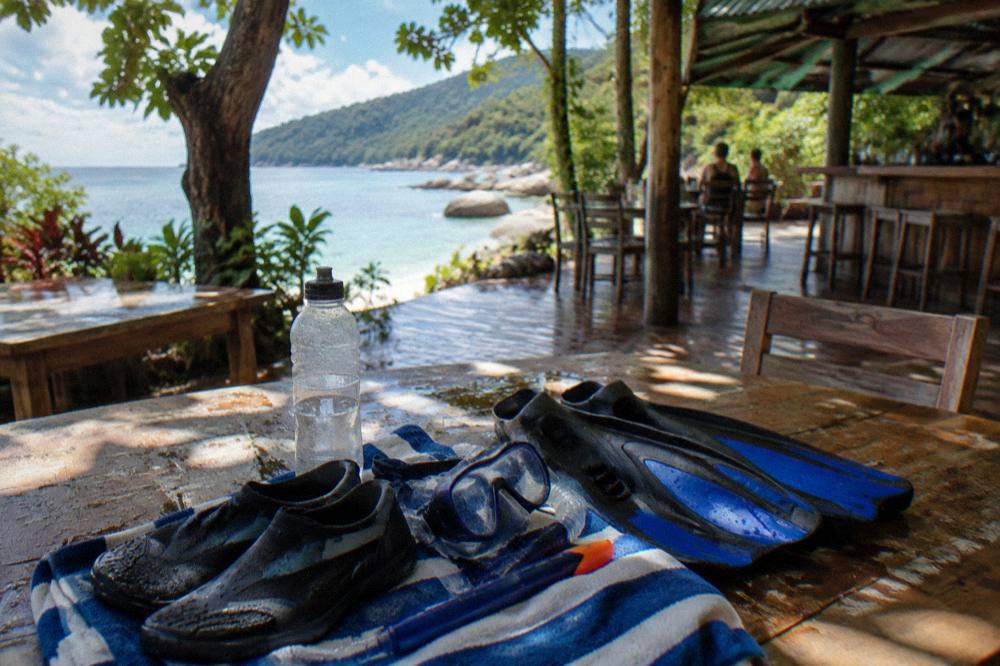
The reef shoes earn their space twice. Both swimming beaches are described as loose coral rather than sand, which is hard on bare feet, and the Nudey Beach track finishes on steep stone steps and boulders. Sun protection matters more than most visitors expect, because the Great Barrier Reef's sun reflects off shallow water, and the Bureau of Meteorology's Cairns outlook routinely carries an extreme UV rating even on mild spring days. The full checklist, including what changes in stinger season, lives in the what to bring to Fitzroy Island guide.
Food is the line item people forget. Of the three snorkel-focused listings, only the Best of Fitzroy package includes a picnic lunch box; the 11am day and the safari both list food and drinks as not included. The island has a beachfront bar and food outlets, so nobody starves, but a day built around the water goes better with snacks you did not buy at island prices. That trade-off is explored properly in the piece on food at Fitzroy Island.
Time budgeting is the last part of the packing question, in the sense that what you bring depends on how long you have. The half days give you 4.5 to 5 hours total, which is one long snorkel and a walk, or the walk and a short one. The full days give you 6 hours or more on the island, which fits both beaches plus a rest, and the how long to spend on Fitzroy Island post works through the arithmetic. On Fitzroy Island Tours this site keeps every current listing side by side, so you can match the hours to the fare rather than guessing.
The one thing not to bring is a fixed itinerary of animals. Pack for the reef, the walk and the weather, and let anything with a shell or a fin be the bonus the official language says it is: a chance, honestly offered, in a national park that does not do guarantees.
Common Questions About Snorkelling At Fitzroy Island
Where can you snorkel at Fitzroy Island?
Queensland Parks names Welcome Bay and the water off Nudey Beach as the island's snorkelling locations, both offering the chance to explore a fringing reef. Snorkelling in other locations around the island may be dangerous due to strong currents.
Can you snorkel from the beach at Fitzroy Island?
Yes. Welcome Bay's reef starts a short swim from the beach beside the ferry jetty, and Nudey Beach is reached by a 1.2 km return walking track. Both are shore-entry zones; no boat is needed.
Are you guaranteed to see turtles snorkelling at Fitzroy Island?
No. Green and hawksbill turtles are reported around the island's snorkelling areas, and anecdotal guest accounts regularly mention them, but no operator or official source guarantees a sighting. A rehabilitated flatback turtle was released from the island after care at the on-island rehabilitation centre, which is separate from what wild snorkelling delivers on any given day.
How much does snorkelling at Fitzroy Island cost?
Ferry-only full days start at A$105 per person and half days at A$88 with gear not included. Snorkel-included listings run from A$129 per person for the 11am ferry day, A$168 for the guided snorkel safari, to A$202 for the Best of Fitzroy package with lunch, gear and a glass-bottom boat tour.
Do you need a stinger suit at Fitzroy Island?
A stinger suit is advised November to May, with higher risk from October, because box jellyfish and Irukandji may be present year-round. The resort states suits are available to hire, and some listings include stinger suit use as a selectable option at booking.
Is fitzroy island snorkeling good for beginners?
Yes, in the named zones. Welcome Bay is sheltered with reef close to shore, and a guided snorkel safari from A$168 per person adds a leader in the water and all-day gear hire, which suits first-timers and weaker swimmers. Stay inside Welcome Bay and off Nudey Beach rather than exploring exposed shores.