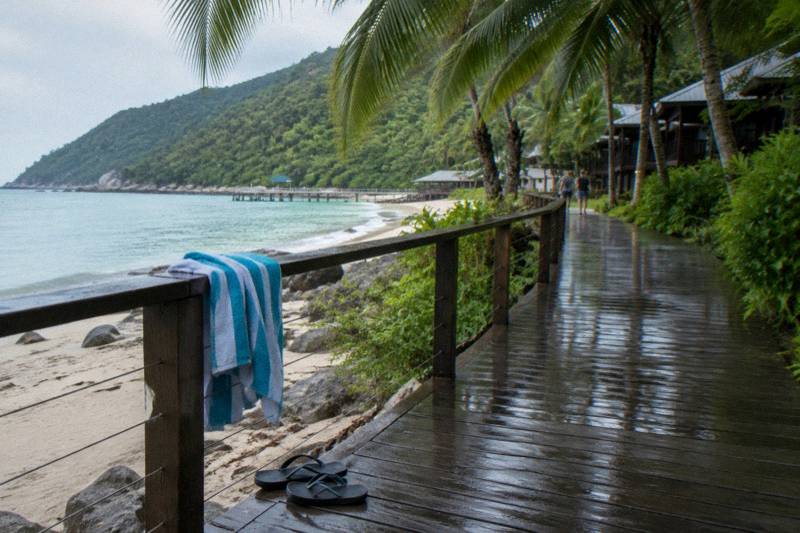
Are There Turtles At Fitzroy Island?
Green and hawksbill turtles live in the waters around Fitzroy Island, but sightings are never guaranteed. An honest guide to where turtles are seen, the island's Turtle Rehabilitation Centre, and which tickets give you the best chance.
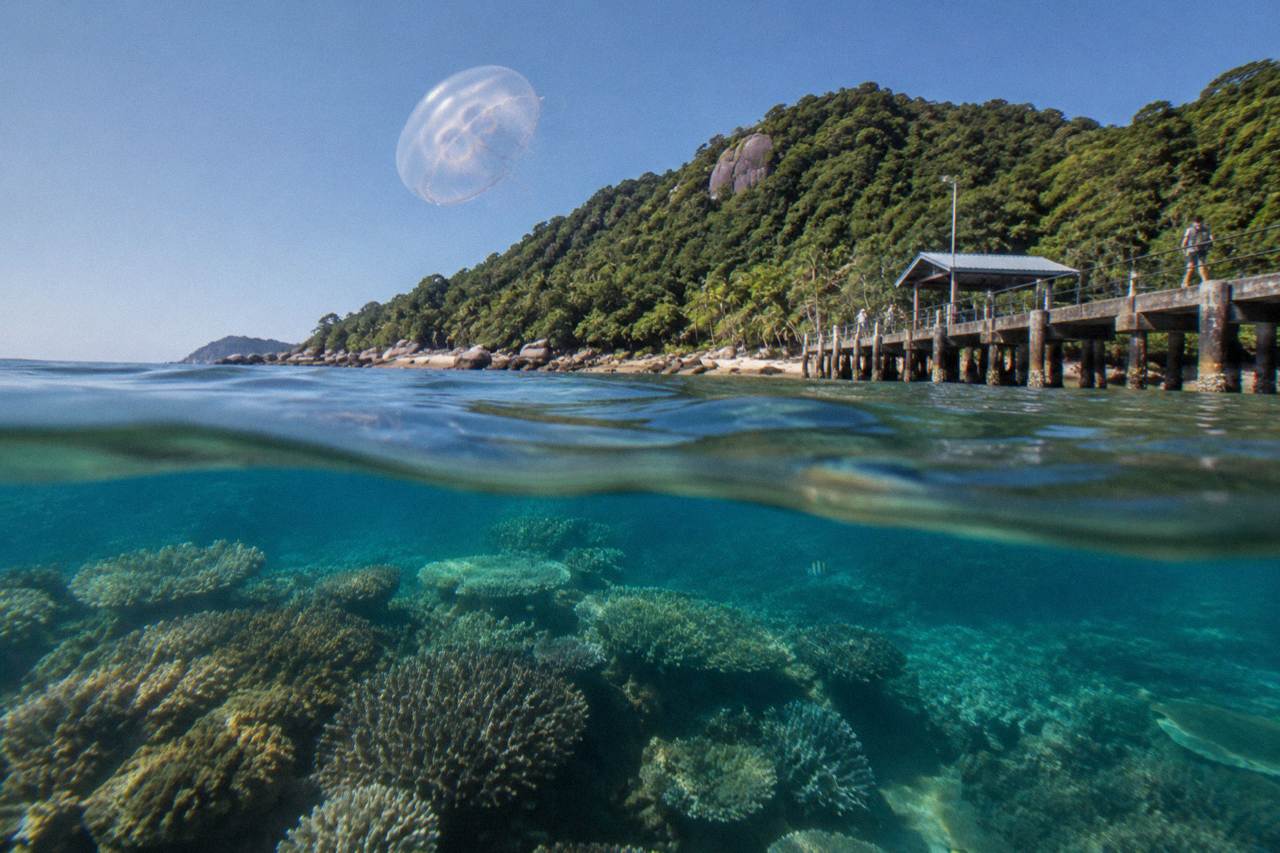
Fitzroy Island sits 25 km east of Cairns inside the Great Barrier Reef World Heritage Area, and its fringing reef supports the sort of marine life that keeps turtles interested: seagrass patches, coral around rocky headlands, and sheltered water in Welcome Bay. Green turtles and hawksbill turtles are the two species described in the area's general tourism and park material, and snorkellers do report crossing paths with them. What no honest page will tell you is that a sighting is certain. Turtles are wild animals with their own schedules, and a quiet day in the bay is a real possibility.
What the island does offer is unusually good odds by design. The snorkelling zones Queensland Parks names, Welcome Bay and off Nudey Beach, are exactly the sheltered, near-shore areas where turtles feed and rest. The island also hosts the Cairns Turtle Rehabilitation Centre's Fitzroy Island facility, so turtles are quite literally resident on the island itself, even when the wild ones stay out at sea. This article lays out what is actually verified about turtles here, where people see them, what the centre offers day visitors, and which tour tickets give you the most time in the water where the encounters happen.
Are There Turtles At Fitzroy Island?
Yes, green turtles and hawksbill turtles live in the waters around Fitzroy Island, and snorkellers in Welcome Bay and off Nudey Beach report seeing them. No operator, resort page or park source promises a sighting, and this site will not either: turtles are wild, mobile and unpredictable, and plenty of good days end without one. What is verified is that the habitat suits them and the encounters are commonly reported.
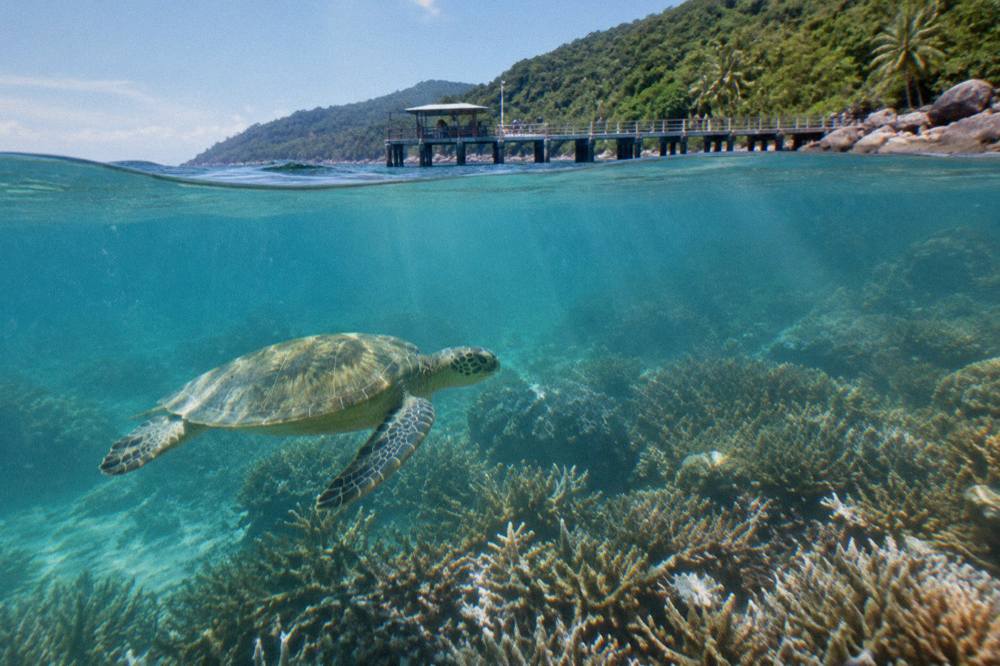
The honest framing matters because the internet is full of pages that read like guarantees. General tourism descriptions of Fitzroy Island note green sea turtles in the snorkel areas, and guest accounts regularly describe swimming near them in the bay. But even though no verified, dated 2026 sighting reports or counts have been published for Fitzroy Island specifically, none could be confirmed in official sources. What exists is a consistent pattern of anecdotal reporting, a confirmed resident population of the habitat type turtles use, and a rehabilitation facility on the island that works with the species year round.
That pattern is worth more than it might sound. Queensland Parks describes the island's fringing reef as explorable from shore at two named locations, and those locations are where essentially all the island's visitor snorkelling happens. Concentrated effort in a small, sheltered area is the single biggest factor you control. A day visitor who spends four hours in the water at Nudey Beach has simply had more turtle-adjacent minutes than one who stands on the jetty for an hour and leaves.
The species mix is worth knowing too. Green turtles, the large, round-faced grazers, are the ones most often described around seagrass and reef flats. Hawksbills, critically endangered and smaller, are associated with rocky reef edges where they feed on sponges. Both are described in the region's general material, and both end up at the rehabilitation centre from time to time. If you see a turtle at Fitzroy Island, pause, keep your distance, and let it choose whether to stay: the reef's rules, set by the Great Barrier Reef Marine Park Authority, are strict on this and we cover them below.
One point of confusion worth clearing up early: the Turtle Rehabilitation Centre on Fitzroy Island and the new turtle centre under construction are two different places. The construction project is on Green Island, the neighbouring island about 45 minutes away by catamaran, with Queensland Government backing and a target opening date that has not arrived. Fitzroy Island's centre is open and operating today, and it is the one relevant to your trip. Our full Fitzroy Island turtle rehabilitation centre guide covers it in depth.
If a turtle encounter is the thing that would make your day, the practical question is which ticket buys you the most time in the right water. The three options below are the ones we compared for exactly that reason.
The snorkel safari is the standout for this particular mission: a guided tour in the water at 10am plus snorkel hire that stays with you until 4pm. The plain ferry day trip gives you the hours but leaves the gear and guidance to sort yourself. The 11am option includes gear but runs a shorter day. We break all three down properly further down the page.
Where Turtles Are Actually Seen Around The Island
The two locations Queensland Parks names for snorkelling are Welcome Bay, where the ferry arrives, and the water off Nudey Beach, a 45 minute walk over the headland. Both are sheltered fringing reef areas, and both are where turtle encounters are reported. Snorkelling elsewhere around the island is described by Queensland Parks as potentially dangerous due to strong currents, so the named zones are the whole story for visitors.
Queensland Parks is explicit on its Fitzroy Island things-to-do page: snorkelling in Welcome Bay and off Nudey Beach offers the chance to explore the fringing reef, and other locations around the island may be dangerous due to strong currents. That is the official map of where you can reasonably be in the water, and it happens to be where the turtle habitat is.
Welcome Bay is the easy option. You step off the ferry, and the snorkel zone starts essentially at the shoreline beside the jetty. Descriptions of the bay note loose coral underfoot on the beach and calm, sheltered water inside the headlands. The trade-off the island's own tour operators acknowledge is that the coral closest to shore in the busier parts of the bay shows more visitor traffic, and the better reef structure sits toward the rocky edges. Turtles moving through the bay tend to follow those edges, so snorkellers who swim out along the headland walls rather than floating in the middle generally report the more interesting water.
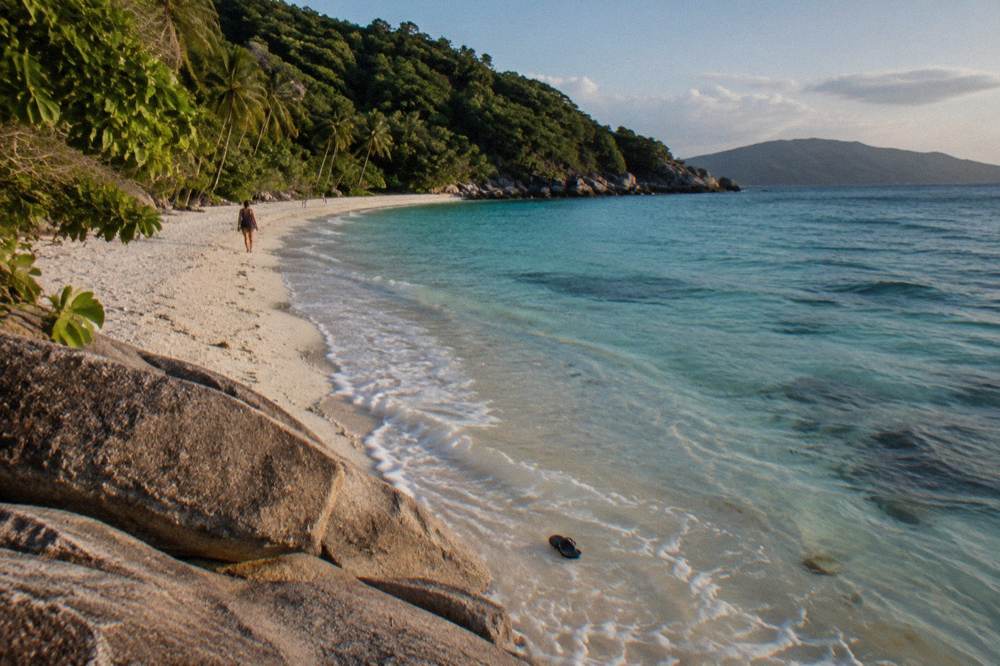
Nudey Beach is the island's signature spot, and the walk there is part of the filtering. The track is 1.2 km return, graded moderate by Queensland Parks, predominantly bitumen with steep stone steps and boulders, and it takes most people about 45 minutes return including a stop at the top. The reward is a white coral beach with rocky headlands at either end, and general descriptions of the site consistently note better coral coverage around those headland and rocky areas, with hard and soft corals, reef fish, and turtles described as occasional visitors. Occasional is the honest word. People do see turtles at Nudey Beach, and people also swim there for an hour and see blue damsels and nothing else.
Here is how the two zones stack up against each other for a visitor whose goal is turtle water time:
| Snorkel zone | Access from the jetty | Effort required | Water character | Turtle reports |
|---|---|---|---|---|
| Welcome Bay | Immediate, entry from the beach beside the jetty | None | Sheltered, calm inside headlands; busier coral near shore, better structure along the rocky edges | Commonly reported, turtles moving along the headland walls |
| Nudey Beach water | 1.2 km return moderate walk over the headland | 45 minutes return for most visitors | Fringing reef around rocky headland ends; generally better coral coverage described at the edges | Occasional visitors described around the rocky areas |
Two practical notes about the zones. First, they are inshore reef, not outer reef: the coral is patchy and recovering in places, which is normal for island fringing reefs this close to a city, and the turtles that use it are feeding and resting residents rather than a tourism draw mustered for visitors. Second, timing inside the day matters more than most people think. Midday sun lights the water best and warms the shallows; early morning and late afternoon are quieter on the water but dimmer under it. The full-day tickets that keep you on the island until 4pm or 5pm let you sample several windows instead of one.
The tide is the other lever. More reef is snorkellable and more turtle grazing ground is accessible around the higher parts of the tide, while a low tide exposes coral flats and pushes activity toward the deeper edges. Neither the resort nor Queensland Parks publishes a tide-specific turtle guide, so the practical version is simply this: check the Cairns tide table for your date, and bias your water time toward the hours around the top of the tide.
Seagrass deserves a special mention because it is the food source. Green turtles are grazers, and the recovery of seagrass meadows off Cairns after years of flood-driven collapse is one of the more meaningful pieces of recent regional news for anyone hoping to see them. More food in the broader area supports more resident turtles, and the sheltered bays of the nearshore islands are where that population spends its time.
The Turtle Rehabilitation Centre On The Island
Fitzroy Island hosts a branch of the Cairns Turtle Rehabilitation Centre, a voluntary non-profit that treats sick and injured turtles and releases them back to the reef. Centre visits and Turtle Talks run Wednesday to Sunday at 2:15pm and 2:45pm, last 30 minutes, cost A$20 adult and A$12 child, and are exclusive to resort guests or travellers on the Fitzroy Flyer.
This is the part of the turtle story that comes with a guarantee of sorts: the centre has turtles in care on most days, and a visit there means actually seeing the animals and the work, even on a day when the wild ones ignore you completely. The program is run by volunteers, partners with James Cook University on research, and holds Advanced Eco Tourism Certification, which is the highest tier of Australian eco-certification. More detail on the centre's history and how it fits a day trip is in our turtle rehabilitation centre guide.
The access rule is the catch, and it is printed plainly on the resort's own turtle rehabilitation tours page: centre visits and Turtle Talks are exclusive for guests staying in the resort or travelling on the Fitzroy Flyer. Sessions run Wednesday to Sunday at 2:15pm and 2:45pm, are capped at 15 guests, run 30 minutes, and cost A$20 per adult and A$12 per child aged 4 to 13, with infants free. You meet five minutes before your session. If you are booked on a Fitzroy Flyer ticket rather than a Sunlover or Fitzroy Island Adventures departure, you are eligible; if not, the centre is off limits for that visit.
That eligibility detail feeds directly into ticket choice, and we come back to it below, because the snorkel safari and the other Flyer-based products are exactly the ones that qualify. It also explains a quirk of the schedule: the talks sit at 2:15pm and 2:45pm, which is mid-afternoon on a full-day island visit, so a Flyer traveller can snorkel the morning, walk to Nudey Beach after lunch, and still make a talk before the ferry home.
The centre's work occasionally makes the news. A flatback turtle named Jelly, a breeding-age female rescued after becoming tangled in fishing line near the island, was released back into the water off Fitzroy Island after rehabilitation, an event reported in local media and a small reminder that the animals swimming past your snorkel mask include ones this facility has put back there. Rescues like that, entanglement in fishing line and ghost nets, are the centre's bread and butter, and the education session covers them directly.
One thing the centre is not: a zoo or a petting encounter. The turtles in care are recovering animals, the visits are educational talks rather than handling sessions, and the certification the program holds is built on that low-impact model. If your picture of a turtle experience involves touching one, the Great Barrier Reef Marine Park Authority's rules, and this centre's whole philosophy, are against you, and rightly so.
How To Maximise Your Chances Of A Turtle Encounter
The levers you control are time in the water, the right zones, calm conditions, and patience: full-day tickets with gear included beat half days, Nudey Beach's rocky edges beat the middle of the bay, midweek calm beats weekend chop, and slow, quiet snorkelling beats chasing. Nothing here guarantees a turtle, but stacking these factors is the difference between a fair chance and almost none.
Start with time, because it is the bluntest instrument. The half-day ferry options on this site's roster, from A$88 per person, give you roughly four to five hours on the island total, and once you subtract the Nudey Beach walk, a lunch, and getting in and out of gear, the actual water time can shrink to 90 minutes. The full-day Flyer products keep you there until 5pm. More hours in the water is the only statistically honest way to improve a wild-animal encounter, and every guide who works these reefs says some version of the same sentence.
Then add behaviour. Turtles rest on the reef and surface to breathe, and a snorkeller who floats still near the rocky edges of Nudey Beach or along the headland walls of Welcome Bay is read as part of the scenery, while one who swims at a turtle is read as a threat and ends the encounter instantly. The marine park authority's guidance on responsible practices around turtles is specific: never touch, grab, lean on or feed them, approach slowly or stay neutral, and do not pursue or encircle. The selfish case and the ethical case point the same way, because a relaxed turtle keeps grazing and a harassed one leaves.
Conditions matter as well, and October to December plus the dry-season months generally deliver the calmest water. Stinger suits are advised from November to May, with higher risk flagged from October, and the resort hires suits; whether a suit affects turtle behaviour is not documented anywhere official, but it certainly extends how long you are willing to stay in the water, which is the thing that actually counts. Avoid the day after heavy rain, when inshore visibility drops and the bay turns murky, and prefer mornings if wind is forecast to build, as it often does in the afternoon. Beyond that, the useful preparation is simple: mask fitted properly, fins that fit, and a plan to be in the water rather than near it.
This is where the guided option earns its price gap. The Snorkel Safari includes a guide-led snorkel tour at 10am, and a guide who works the same reef daily knows which bommies and edges hold animals that week, points out turtles the moment they appear, and reads the conditions. After the guided session the gear stays yours until 4pm, so you keep hunting on your own with the local knowledge fresh. Here is how the three most turtle-relevant tickets on the roster compare:
| Ticket | Price | Day length | Water access | Guided | Rating and reviews |
|---|---|---|---|---|---|
| Guided Snorkel Safari, full day | from A$168 per person | 10 hours, about 8 on the island | Guided 10am snorkel plus gear hire until 4pm | Yes, 10am session | 4.2 from 43 reviews |
| Flyer Ferry, 10 hour day | from A$105 per person | 10 hours | Snorkel gear only if option selected at booking | No | 4.7 from 139 reviews |
| 11am Ferry, Snorkel Gear Included | from A$129 per person | 7 hours, 11am to 5pm | Snorkel equipment included | No | 4.0 from 8 reviews, a very small pool |
The ratings deserve honest handling. The 4.7 from 139 reviews on the plain Flyer day trip is a solid pool. The safari's 43 reviews are modest but real. The 11am option's 8 reviews are too few to mean much either way, and we say so rather than dressing it up. The pattern across all three is that the Flyer-based products, whatever their review depth, are the ones that unlock the turtle centre sessions, which is why they dominate this particular comparison.
What The Rules Say Around Turtles
Turtles in the Great Barrier Reef Marine Park are protected by federal rules that ban touching, chasing, feeding or encircling them, require boats to slow near surfacing animals, and restrict lights and flash around nesting beaches. At Fitzroy Island the practical version is simple: keep your distance, stay still, and let the turtle decide the encounter.
The rules come from the Great Barrier Reef Marine Park Authority and apply across the World Heritage Area, including the water you snorkel in at Welcome Bay and Nudey Beach. The authority's responsible-practice guidance for turtles is blunt: never touch, grab, lean on or feed a turtle or hatchlings, do not light fires on nesting beaches, approach slowly or stay neutral in the water, keep at least two metres from nesting turtles, avoid encircling or pursuing animals, and limit lights and flash photography during nesting. For a snorkeller at Fitzroy Island, the operative lines are the touching, pursuing and encircling bans.
Queensland Parks adds the land-side rules for the island itself, in the national park that covers most of it. Visitors are asked to stay on the marked tracks, not just for the vegetation but because off-track walking spreads seeds and soil in one of the most pest-free island systems in the World Heritage area; the park service explicitly asks visitors to check shoes, gear and bags for soil, seeds and insects before arriving. Campfires are banned, drones are restricted on national park land, and pets are prohibited on the island and its tidal lands.
Fisheries rules apply if you are wondering about spearfishing or collecting, and the marine park zoning maps published by the authority are the final word on what is allowed where. For the purposes of a turtle-focused visit, though, the whole compliance picture compresses into three sentences. Do not touch the turtles or chase them. Stay on the island's tracks and out of the closed areas. Check the Queensland Parks alerts page before you walk, because track closures for weather damage or planned burns do happen and the current status is always on the alerts system.
One question we get asked in this territory is about crocodiles, and the honest answer is that there are no crocodile warnings or alerts specific to Fitzroy Island: no sightings reported, no closures, nothing from Queensland Parks tied to this island. The general tropical North Queensland caution about not swimming in mainland river mouths and estuaries is a different geography from an offshore island beach, and the sources that discuss Fitzroy Island's water safety focus on currents and stingers, not crocodiles. Our are there crocs at Fitzroy Island piece covers that question in full.
Which Ticket Gives You The Best Shot
For a turtle-focused day, the guided Snorkel Safari is the strongest ticket on this site's roster: from A$168 per person, it combines the full-day Fitzroy Flyer crossing, a guided 10am snorkel session, gear until 4pm, and turtle centre eligibility. The plain Flyer day trip at from A$105 is the budget route to the same hours; the Sunlover and two-island products trade water time for other inclusions.
The safari's case rests on stacking. It is the only roster listing that includes a guided in-water session, which puts an experienced local eye on the reef with you at the exact hour the morning light is best. It carries the longest gear window, hire until 4pm against the do-it-yourself alternatives. And because it travels on the Fitzroy Flyer, it satisfies the turtle centre's eligibility rule, so the 2:15pm or 2:45pm Turtle Talk is available on the same ticket as your snorkelling. For a visitor whose whole day is built around turtles, that is the full circuit: guided reef time in the morning, a wild-water afternoon, and a guaranteed look at turtles in care before the 5pm ferry home.
The Fitzroy Island Adventures full day, from A$108, deserves a mention as the roster's most reviewed listing, 4.5 from 1,990 reviews, and it is a fine ticket, but it does not travel on the Flyer, so the turtle centre is not accessible on it, and its snorkel gear and glass-bottom boat ride are optional extras selected at booking. The Sunlover ferry products, from A$105, are the same story from a different terminal: good boats, comfortable crossings, optional activities, no centre access. Neither is a bad choice, and our Fitzroy Island day trip options compared page breaks the whole roster down family by family. For this specific mission, though, the Flyer products win on structure.
The middle option is the 11am Flyer day with snorkel gear included, from A$129. You lose the morning, arriving around midday and leaving at 5pm, but the gear is in the base price and you still qualify for the turtle talks. Its 4.0 rating sits on only 8 reviews, so treat that number gently. The two-island Fitzroy and Green Island days, from A$196, split your reef time between two destinations and are brilliant for variety, but variety is the enemy of turtle odds: six hours across two islands is less water time at either one. The Moore Reef combo and the two-day reef packages are outer-reef journeys first, with Fitzroy as a stop, and they suit a different question than this one.
The budget route, for completeness, is a half-day Flyer ticket from A$88, morning or afternoon, ferry included. It is the cheapest way onto the island and into Welcome Bay, and if a turtle happens to swim past you in those few hours, nobody will ask what you paid. But the honest arithmetic says a half day is roughly half the water time, no afternoon light, no turtle talk window, and no margin for a slow start. If turtles are the point, buy the hours.
Here, one last time, are the three tickets this comparison keeps returning to:
Whichever you choose, the deal you are signing is the same one every snorkeller on the Great Barrier Reef signs: the reef owes you nothing and usually gives you more than you expected. Turtles at Fitzroy Island are a strong possibility, never a promise, and the visitors who see them are almost always the ones still in the water at three in the afternoon. As the team behind Fitzroy Island Tours puts it when comparing these listings, the ticket sets the window, the turtle sets the schedule.
The full-day ferry on its own remains the quiet value play of the trio, and it earns its solo spot here: ten hours, from A$105 per person, the best-rated of the three, and the widest window a budget allows.
And if you want the guided morning that turns that same window into a structured search, the safari upgrade is the one add-on with a direct line to the question this article asked at the top.
Common Questions About Turtles On Fitzroy Island
Are There Turtles At Fitzroy Island?
Yes, green turtles and hawksbill turtles live in the waters around Fitzroy Island, and snorkellers in Welcome Bay and off Nudey Beach commonly report encounters. No sighting is ever guaranteed, and no official source publishes counts. The island's Turtle Rehabilitation Centre also has turtles in care, and those visits are the only encounter you can book with certainty.
What kind of turtles are at Fitzroy Island?
Green turtles and hawksbill turtles are the species described in the area's park and tourism material. Greens are the larger grazers associated with seagrass and reef flats; hawksbills are smaller, critically endangered, and feed around rocky reef edges. The rehabilitation centre on the island works with rescued turtles of the region's species, including the flatback released from the island after rehabilitation, as reported in local media.
Can I visit the Turtle Rehabilitation Centre on a day trip?
Only if you are staying at the resort or travelling on the Fitzroy Flyer. The resort states that centre visits and Turtle Talks are exclusive to those two groups. Sessions run Wednesday to Sunday at 2:15pm and 2:45pm, last 30 minutes, cap at 15 guests, and cost A$20 per adult and A$12 per child aged 4 to 13, booked through the resort.
Where is the best place to snorkel with turtles on the island?
Queensland Parks names two snorkelling locations: Welcome Bay and the water off Nudey Beach. Nudey Beach's rocky headland ends are generally described as holding the better coral and the more consistent turtle reports. Snorkelling outside these named zones is described by Queensland Parks as potentially dangerous due to strong currents.
Is it okay to touch or feed a turtle if it swims close?
No. Great Barrier Reef Marine Park rules ban touching, grabbing, leaning on, feeding, pursuing or encircling turtles anywhere in the marine park, including at Fitzroy Island. Stay still, keep your distance, and let the turtle control the encounter. Harassed turtles leave the area, which spoils it for everyone after you.
Which tour ticket is best for seeing turtles?
The guided Snorkel Safari, from A$168 per person, stacks the most turtle-relevant factors: a guided 10am snorkel session, gear hire until 4pm, about 8 hours on the island, and Fitzroy Flyer travel that qualifies you for the turtle centre talks. The plain full-day Flyer ticket at from A$105 is the budget alternative with the same hours, and the 11am Flyer day with included gear, from A$129, is the short-day middle ground.